4 Reasons I’m Not Buying an iPhone for My Teen This Christmas
Parenting


Audio By Carbonatix
By Michael Foust, Crosswalk.com
One of the strangest stories from my childhood involved one family member giving a dying one a carton of cigarettes for Christmas.
It took place back in the 1980s—when Atari ruled living rooms, Michael Jackson dominated the airwaves, and plenty of people still thought pro wrestling was real.
It was also a time when society was still coming to grips with the real-world dangers of cigarettes. Restaurants still had “smoking” and “no-smoking” sections, and airlines (yes, airlines!) even allowed passengers to light up in designated areas. Never mind that the byproduct of cigarettes—smoke—drifted freely from one section to another, much like a cloud floating lazily across a summer sky. That’s because, well, smoke does what smoke has always done: It goes wherever it wants.
Back in the 1980s, the major cigarette manufacturers were still insisting that their products were not addictive and did not cause cancer, despite mounds of research and story after story of friends and family members dying too young, coughing all the way to the grave.
Which brings me back to the unforgettable story of that Christmas gift. It was the holiday season, and my granddad was gravely ill—he had smoked all his life—when a family member gave him a carton of cigarettes as his gift. What better way to celebrate the blessing of the Christ Child than a present packed with addiction, disease, and death?
To be fair, the gift may have been intended with a touch of morbid humor —as if to say: Here’s what did you in. There’s no turning back now. Enjoy your final days.
Back then, one out of three Americans smoked. For millions of Americans, it was an accepted part of everyday life.
Still, it makes me wonder: What widely accepted habit of today will one day give us second thoughts? Put another way: What do we treat today as harmless…that truly isn’t?
Often, I wonder if it’s the iPhone and its inseparable partner, social media—or, if that’s not your brand, the smartphone you keep within arm’s reach at all times.
I think about this regularly because I have teens who want iPhones, and because I’ve seen how that glowing device has shaped me and the society around me in troubling ways—and because I don’t want my children paying the same price.
The parallels to cigarettes are more striking than you might think. Social media is everywhere, its negative effects are increasingly visible, yet the companies that profit from it continue to resist acknowledging its documented harms, largely because of the threat to their bottom line.
My middle child began asking for an iPhone barely after he turned 13. And now, with the Christmas season just around the corner, his requests are even more persistent.
But (and he already knows this) he won’t be getting one. Here are four reasons why:
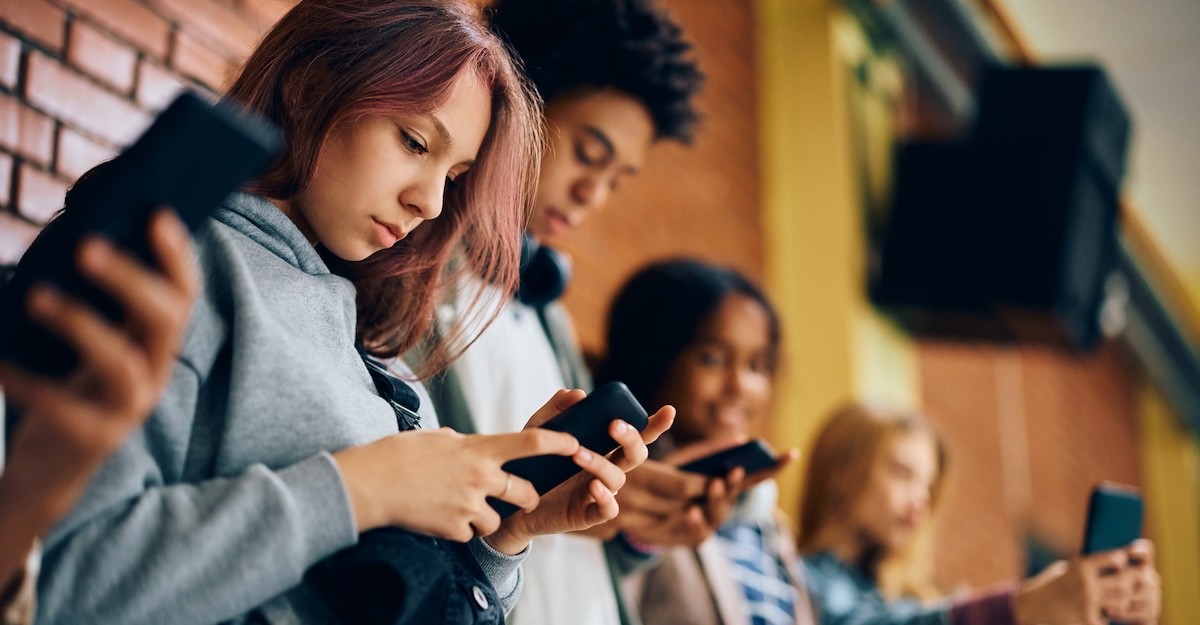
1. They Distract from What Is Good
Our society has undergone significant changes since the arrival of the smartphone, making it difficult to recall what life was like before it. It’s wise, though, to peel back the layers of our minds to recall what we once did—and no longer do.
Here’s what I did: I read more. I talked to people more. I thought more. I enjoyed hobbies. I watched a movie without doomscrolling. I wasn’t constantly interrupted by a text, a social media notification, a sports score, or a breaking-news alert—or even a random reminder that my favorite online store is having its best sale of the season.
One of the saddest scenes in our digital-crazed world is a restaurant full of people not talking or laughing, but staring down at their screens. They’re not engaged in conversation or enjoying one another’s company. They’re not even mentally present. Instead, they’re captivated by what everyone else is doing—a friend in another town, an aunt across the country, or—most likely—a content creator in another country who has mastered the art of holding their attention.
We’re like the toddler who reaches for one toy but is instantly distracted by another, never fully engaging with what’s right in front of us.
I have four kids. Two excel at sports, a third is gifted in art, and a fourth is an avid reader. Would they have discovered those passions if they had grown up with digital distractions constantly tempting them? Probably not.
God hardwired us for connection, for savoring His creation, and for cultivating the talents He placed within us. Smartphones distract us from all three.
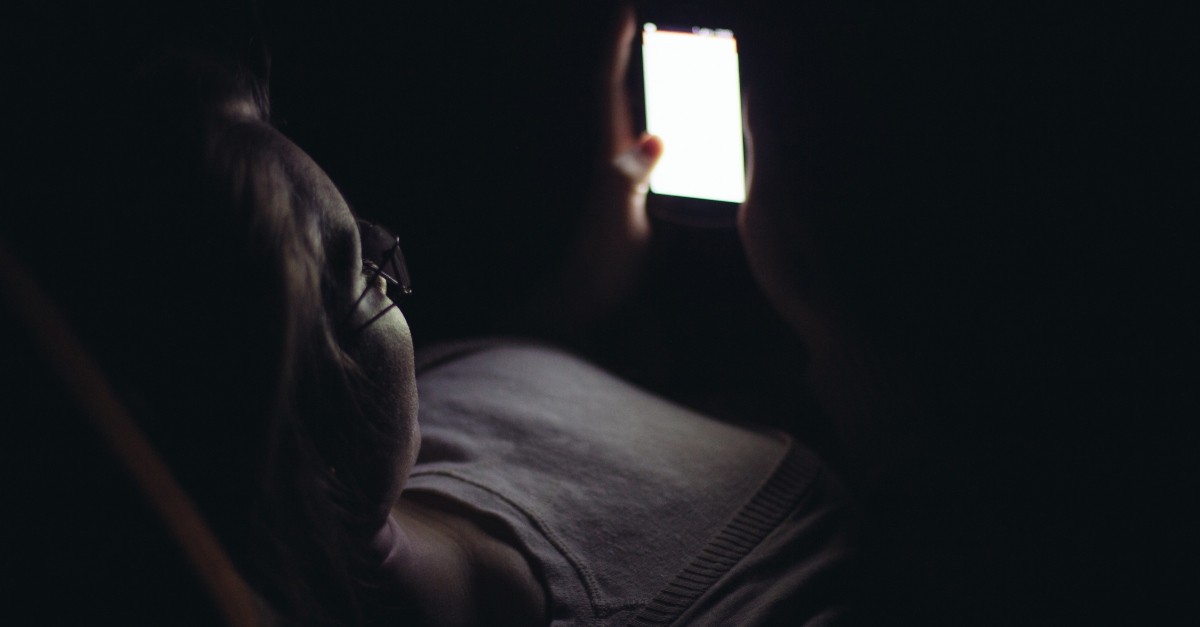
2. They Open the Portal to What Is Bad
Smartphones are like the wardrobe in C.S. Lewis’ stories: There’s a dash of good inside it, but plenty of danger, and before you realize it, hours have passed in another world.
No parent would leave a child alone at an adult bookstore, a seedy dark alley, or a casino -- yet smartphones open the digital doorway to them all. That shiny iPhone offers unfiltered sexual content, unmonitored spaces filled with strangers, and slot-machine-style dopamine hits -- where algorithms exert influence, and your child’s attention span becomes the portal to a company’s profit. And if your children are looking for a literal digital casino, there’s that, too.
A 2023 Common Sense Media survey found that 41 percent of children had seen pornography while at school, an eye-opening stat that is, no doubt, driven by the proliferation of iPhones and other types of smart devices. Just as sad: The average age at which children are first exposed to porn is 12.
Of course, many parents hand their children iPhones with various settings “locked down,” believing the child has no access to the phone’s most luring features. But experts warn those safeguards are often easy to circumvent—through hidden browsers embedded within apps, by creating a second Apple ID on the device, or through a host of other workarounds.
The uncomfortable truth is this: A smartphone is not a neutral tool placed in a child’s hands. Left unrestricted, it is a dangerous gateway into a dark, life-changing world.

3. They Fuel Depression, Anxiety, and Comparison-Driven Pressure
Perhaps an iPhone without an Internet browser or an App Store would not be a doorway to so much darkness.
Yet for most people, iPhones are tightly intertwined with social media—and social media is engineered to hook us. In fact, mounting research suggests that as teens’ time on these platforms increases, their emotional well-being declines.
Since 2010 -- the year Instagram launched and just three years after the first iPhone -- depression among teens ages 12–17 has risen by roughly 150 percent. Emergency-room visits for self-harm among girls ages 10–14 have nearly tripled, while suicide rates for that same age group have jumped 91 percent for boys and 167 percent for girls. College-age young adults tell a similar story, with long-running studies finding that anxiety and depression have more than doubled over the past decade. (Source: The Anxious Generation)
Social media is like a digital drug that flips reality on its head, convincing teens that their own lives are broken while everyone else’s lives are flawless. It fuels a never-ending cycle of comparison and judgment at precisely the stage when young people are vulnerable to such messages. Unfortunately, too many teens are finding their worth not in Christ, but in likes and comments as they measure their value by the approval of friends, acquaintances, and even strangers halfway around the world.
Unlike previous generations, today’s kids don’t escape their social problems when they walk through the door at home. Those anxieties now live 24/7 on social media -- in posts, comments, likes, and group chats -- following them through the evening and into bed as they scroll desperately for validation. They wake up the next morning exhausted, and the cycle begins again.
There are other problems with social media. It normalizes the abnormal. It elevates the loudest and most divisive voices. It amplifies lies and half-truths. It makes you think the entire world is angry and hostile when, in reality, most of our neighbors are not. They’re not on social media all the time. They’re just trying to make dinner.
Thankfully, governments across the planet are taking action.
The U.S. Surgeon General warned that social media poses a serious threat to young people’s mental health, linking excessive screen time to rising rates of anxiety, depression, and sleep deprivation. On the other side of the world, Australia this year became the first country to ban children under 16 from having social media accounts, forcing major platforms to block access and threatening hefty fines for non-compliance.
Hopefully, other governments will follow suit—and perhaps parents will reconsider whether a smartphone is worth the risk at all.

4. They’re an Unprecedented Pull on Our Attention
Humans have always wrestled with distractions from the more important things in life. But smartphones have effectively gathered every distraction in the history of mankind and placed them into a single, ever-present device. They are tiny portals to the entire world, offering an infinite stream of content, stimulation, and temptation, all carried within an arm’s length…all the time.
That wasn’t the case in the past. Every movie had an ending. Every TV series had a final episode. And every game had a final horn. However, smartphones and the platforms they host, such as YouTube and other social media platforms, are distinct. And if those don’t fit your bill, there are other temptations. Like video games. And endless shopping. And other algorithm-fed content.
They never run out of material, and they never remind us to stop. There is always one more video, always one more post.
That reality has profound spiritual consequences. When every spare moment is filled with noise, the habits that once anchored faith—silence, reflection, prayer, and Scripture—are crowded out.
“Be still, and know that I am God” (Psalm 46:10). Yet in a world where distraction is instant and constant, learning to be still before God has become harder than ever, not because He is distant, but because our attention so often is.
Does anyone truly believe our culture has advanced where it matters most in the age of the iPhone?
We are a society that is always distracted and never bored, and that’s a troubling path for humanity's future. It’s also unhealthy for our souls. Boredom is often the catalyst for creativity, and creativity is where God often does His work.
My son will, indeed, get a phone -- just not an iPhone. He’ll have a device that can call, text, and reach us when he needs to, but one stripped of the social media feeds that hijack attention and crowd out stillness. (Gabb, Bark, MMGuardian, Pinwheel, and Troomi are among the companies that offer alternatives.)
Some might call it a “dumb phone.” I call it a smart act of resistance in a culture that has lost its way.


