Ordering lunch is more stressful than public speaking for 1 in 4 Americans
Lifestyle

Audio By Carbonatix
9:30 AM on Tuesday, May 19
By Andy Grindstaff for Global Payments, Stacker

Ordering lunch is more stressful than public speaking for 1 in 4 Americans
The most stressful part of your lunch break might be ordering. New research explains why and what's being done about it.
You know the feeling of being at the counter with the line behind you growing. The menu has 47 items on it. The person waiting to take your order is being patient, but you can feel the clock ticking. You haven't been here in a while, and you're not sure what's new.
New research from Global Payments surveyed 2,000 Americans about what it actually feels like to order at a quick-service restaurant (QSR).
A few stats are worth pausing on:
- 29% of U.S. consumers say it's more stressful than public speaking.
- About 1 in 4 said it’s more stressful than a job interview.
- 21% think it’s more stressful than going through airport security.
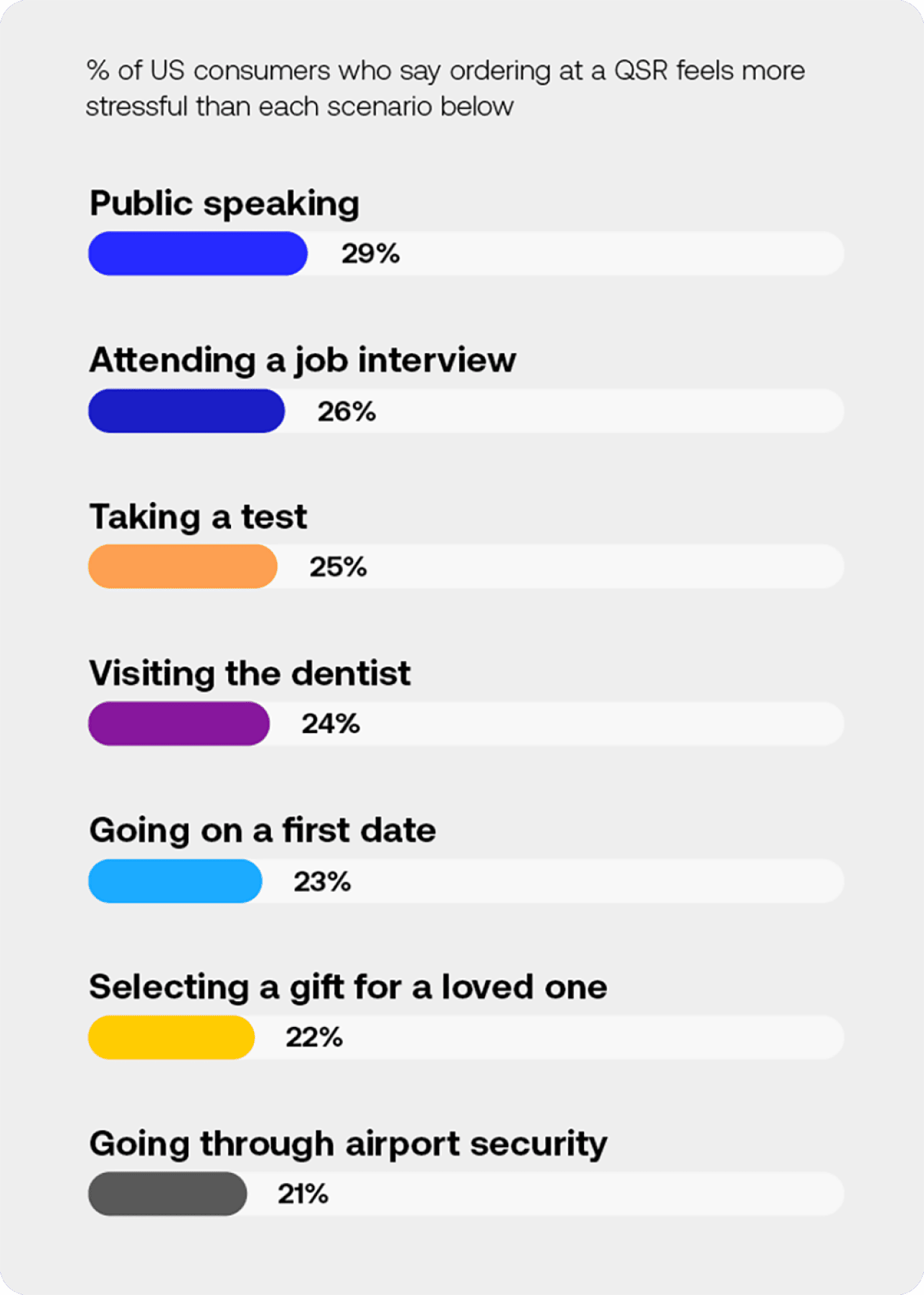
Below, Global Payments digs into what the survey reveals about lunchtime order stress.
Why is ordering fast food so stressful?
The reasons aren't hard to trace: too many options, confusing menus, poorly designed self-service kiosks, and staff asking about add-ons.
Any one of those is manageable. But enduring all of them at once, with a line forming behind you, is a different experience entirely. The research identifies these factors as commonly cited sources of ordering stress, and they show up consistently across thousands of respondents:
- 64% of U.S. consumers are extremely or very aware of the people waiting behind them in line.
- 63% of U.S. consumers find large menus moderately, very or extremely overwhelming.
- 37% of U.S. consumers have walked away from an order because the process felt rushed, unclear or uncomfortable.
Does having more options actually make ordering easier?
The ability to modify everything — swap the protein, add a sauce, hold the onions — sounds like a plus. But in practice, it can tip an already overwhelming experience into full cognitive shutdown.
Every additional question asked at the counter is another decision the customer has to make under pressure. But the problem isn’t the options themselves; in fact, bundles and customization are actually part of the solution. Bundles simplify the decisions, and the research shows they’re the number-one driver of purchasing choices. Customization is something most people say they’d do more of if ordering felt easier. But the friction lies in being asked to navigate everything at once, on the spot, without much help.
Is it stressful for the staff taking your order, too?
It’s worth considering that the person on the other side of the counter is navigating the same chaos. They may be working within a system that wasn't built to make either of your lives particularly easy.
When the menu is confusing, the modifications are complicated or the kiosk isn't cooperating, that pressure lands on both sides of the counter. The best ordering experiences tend to be the ones where the technology is doing the heavy lifting so neither person has to.
Why do so many people order the same thing every time at QSRs?
Many people have developed a solution to this problem of order anxiety: choosing the same thing every time. About 60% of U.S. consumers say they have a go-to order they fall back on at QSRs.
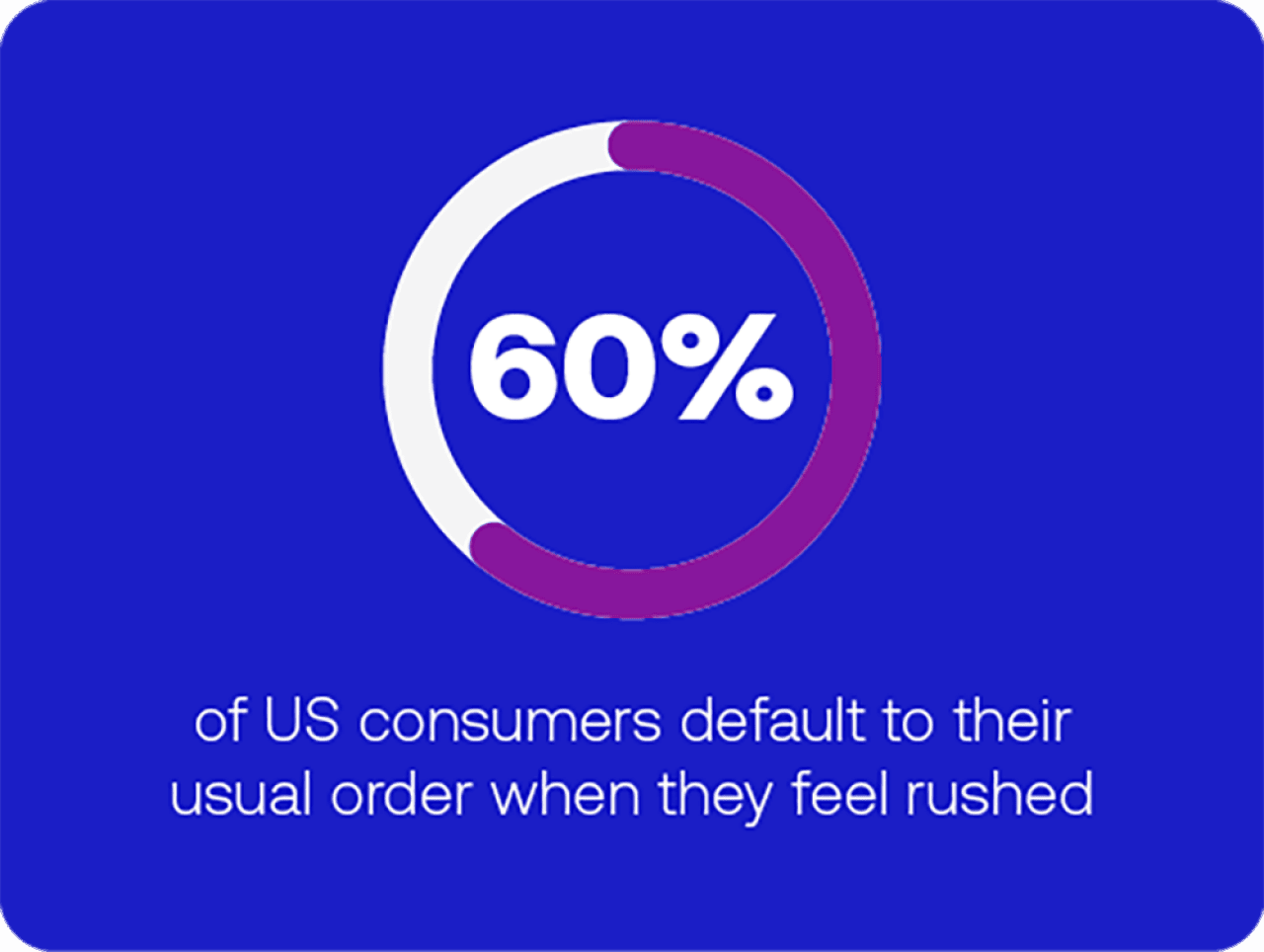
When the menu feels overwhelming and the clock is running, defaulting to something familiar is the path of least resistance. It's less "I really want the usual" and more "I really can't deal with this right now."
Are people actually happy with what they ordered?
Only 34% of Americans say they're very confident they ordered what they actually wanted. Thirteen percent ate their meal and still felt like they'd missed something better. Ten percent said they outright regretted what they got.
So the “safe” order solves the in-the-moment stress, but not the underlying problem. Most Americans are leaving something on the table — sometimes literally.
How many people leave a fast food restaurant without ordering?
Thirty-seven percent of Americans have walked out of a quick-service restaurant without ordering at all, and not for the reason you might think. They were hungry, and the menu was right in front of them, but something about the experience felt rushed, unclear or uncomfortable.
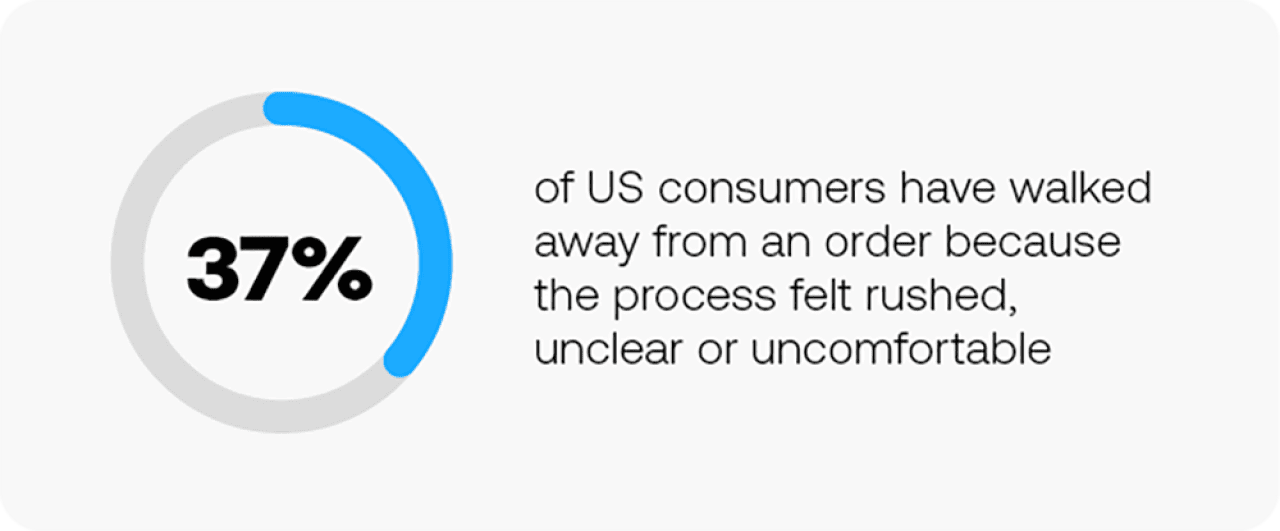
That number may read as a quirky data point to some. But it's more likely a design problem. These aren't people who changed their minds. After all, they came in with every intention of ordering something. The question is whether the experience was built to meet them there.
Do restaurants actually know this is happening?
Some restaurants are paying very close attention to this dynamic. There are operators who have hired agencies to physically track where customers' eyes land on a menu board with cameras and behavioral data, and then redesigned the layout based on what they found. Most people walking up to the counter have no idea that level of research went into what they're looking at.
The good news is that with digital menu boards now standard in many locations, that kind of iteration is faster and cheaper than it's ever been. The experience is fixable. It's just a question of whether it's being treated as a priority.
Methodology
This research is based on a quantitative survey of 2,000 U.S. consumers who had eaten at or ordered from a quick-service restaurant in the past six months, conducted in March 2026 by Global Payments Consumer Insights. Respondents included a broad, representative adult sample with balanced distribution across ages 25-64 and an even gender split, with income skewing toward lower-to-middle tiers reflecting typical QSR behavior patterns.
This story was produced by Global Payments and reviewed and distributed by Stacker.


