The Gift of Teaching
Ministries > In Touch Ministries with Dr. Charles Stanley
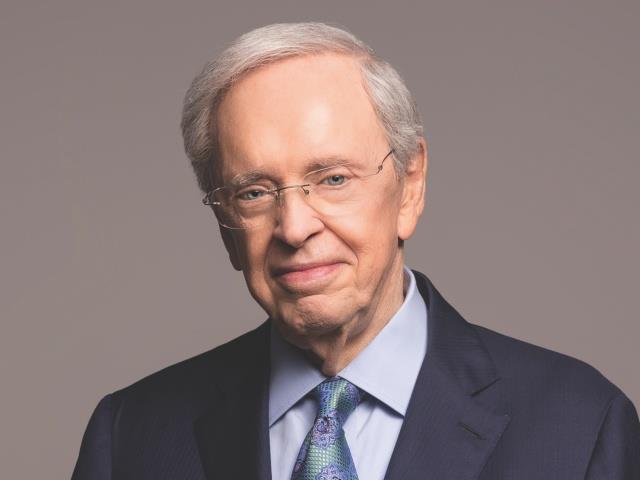
Do you desire God's truth to be taught? Dr. Stanley shares that the gift of teaching requires diligence in research and good communication skills to help others grow in their relationship with Jesus Christ. Discover the characteristics of those with the spiritual gift of teaching.
Dr. Charles Stanley: All teachers aren't seminary students or theologians of the type. There are some people who have godly wisdom, who know the Word of God, who are very, very practical, that you and I must not overlook in life. I'd rather go to somebody who says, "I seen Jesus," which is incorrect English, who's really seen Him, than to someone who says, "I saw Him" but never did.
Guest (Male): False teaching is sometimes obvious, sometimes subtle. Either way, Christians need to be prepared to defend the gospel, and some believers are specially equipped by God to explain the truth. You might be one of them. Stay with us now for In Touch, the teaching ministry of Dr. Charles Stanley, to learn about these people who have the gift of teaching.
Dr. Charles Stanley: Now, we know in this series entitled Living in the Power of the Holy Spirit, this is a section of that particular series that deals with spiritual gifts. While there are three categories of these gifts—First Corinthians, Romans, and in Ephesians—in Romans Chapter 12, and you might want to turn there, what we have is those motivational gifts that Paul speaks of in this chapter. Here is what he says in verse six: "Since we have gifts that differ," that is, in the body of Christ, there are seven different motivational gifts. Why different ones? Because the body of Christ needs all different gifts. If you will notice what these gifts are, the truth is, we all need each other. We all rely upon each other. He says we've been given these different gifts according to the grace given to us, that is, each of us is to exercise them accordingly. The fact that you have a gift from God to enable you, to equip you, that deep down inside motivates you, he says these gifts are to be exercised for the good of the whole body. He says exercise them according, that is, to the grace of God that has been given to you. Then here is what he says: "If it's prophecy, according to the proportion of your faith; if service, in his serving; he who teaches, in his teaching; he who exhorts, in his exhortation; he who gives with liberality; he who leads with diligence; and he who shows mercy with cheerfulness." There are seven gifts all of us need in the body of Christ. So today, we come to the gift of teaching. We've talked about prophecy, we've talked about service, the gift of teaching. I want to be sure to clarify something, and that is, because you say when you listen to this particular area, "Well, that's not my gift," think about this for a moment. You do not have to have the gift of teaching to be an excellent teacher. You could have the gift of service, and what motivates you is your desire to meet a need. Whether it's in a classroom in school, or whether it's in the church, or whatever it might be, that motivation, that drive within you to serve, what happens is the person with the gift of service can make a fantastic teacher. The person with the gift of mercy can make a fantastic teacher, or the gift of administration, or the gift of giving, whatever it might be. You don't have to have that particular gift to be very, very effective. So what I want you to see is this: you can't say, "I don't have this gift, don't have that gift," because it doesn't make any difference what your gift is. The issue is this: God has given you a specific gift, and He will give you areas in which you can serve. So we come to the idea of the gift of teaching, which Paul speaks of here. When you think about the whole idea of the gift of teaching and ask yourself the question, "What are the characteristics?" A person with the gift of teaching is very orderly about the way they go about things. They lay it out in an orderly fashion. Now, that person sometimes, when you are talking to them and you want to ask them a question, sometimes they will start the way they think. They will start at the beginning, and they'll take you through the series, and you are saying, "Just give me the bottom line." They don't think bottom line. They want to get you there in an orderly fashion. So if you are in your home with your children, or whether it's in your business, or whatever it might be, the person with the gift of teaching has a way they present things—orderly, organized—that's the way they think. For you to try to get them to think some other way, you're wasting your time because that's the way God has wired them, to think in an orderly fashion. The truth is, we all learn more, we all understand better, if somebody starts at the beginning, explains it, and takes us step by step. The second quality characteristic of the gift of teaching is to be very thorough. They are going to sometimes give you very long answers when you just want a short one because they like everything complete. They don't leave anything hanging at the end. So you and I have to learn to listen to people. One of the things that is so important about this series is most people do not know how to listen to other people. They don't. The reason is we all have our own agenda, and so we want it short, quick, the bottom line. The gift of teaching is very thorough, a desire to know, and sometimes can become a little irritating if a person is a little impatient. Number three is the need to validate the information that they hear. For example, the person with the gift of teaching, you can give them some facts and they don't stop at that. They want to know, "Where did you learn that? How did you come to that conclusion?" They want to know why, how, and when. They want you to validate and to prove oftentimes. It is very important for the person with the gift of teaching to be able to validate the source. Oftentimes, what happens is those people are alert to facts and ideas that other people skip right over. We'd hear it and it would just go right over our heads. But with a person who has the gift of teaching, their ears are open to the facts. They want to know each detail, and so oftentimes they hear and see what we don't. Then, for example, there is the great delight in studying and researching. The person who has the gift of teaching loves to study. Here is the issue: sometimes the person who has the gift of teaching is just happy learning it. If that person happens to be a pastor and he loves to study, when he gets up to preach and to teach, his goal—what satisfies him—is that he's imparted knowledge. Well, something's missing. Part of the problem is, here is somebody who probably has the gift of teaching and who's just satisfied having studied, worked hard, given the truth. They're happy. The problem is this: proclamation without transformation in people's lives is just passing words. There are many people who stand in classrooms who know all about the text but do not know the person, Jesus Christ. If your goal is simply knowledge, if what satisfies you is the fact that you just know and you have no desire to share it, there's something missing. The person with the gift of teaching who is walking in the Spirit is not only satisfied with knowing, but they want to tell it. Truth is to be presented for the purpose not of just people gaining knowledge, but that God would transform their life. Proclamation for the purpose of transformation in the life of the person who's heard it.
Guest (Male): As a parent, for example, just giving children information is not enough, but it is application and helping them to see. The teacher must be willing to be open and transparent and say, "I failed at this point. Here's a lesson God taught me, and here is how He had to work in my life to get me to learn that." What opens people's hearts to receive the truth is not some person who is perfect and leaves the impression of being perfect, but somebody who's willing to be open and transparent and say, "God had to teach me some very difficult lessons, and it was hard, and I didn't do very well. He has run me back to that three or four or five times." People identify with that.
Dr. Charles Stanley: Another point here of characteristic is clarifying misunderstandings. Watch this. Let's say, for example, the person with the gift of teaching hears some information and they go along with the information. All of a sudden, they realize that's not true. Here is what the gift of teaching does. The gift of teaching doesn't say, "Well, forget it, we'll find out later." No, they go back and they say, "All right, now, what is it I heard? What is it exactly what they said?" And they want to trace it all the way up to the present time to see why they arrived at the wrong conclusion. The person who has the gift of teaching, when they're dealing with someone else, here is what they're going to do. You come to them and you say, "I'm in this mess. I don't know how I got here. I don't know what to do." The person with the gift of teaching says, "Let's start at the beginning, orderly. Tell me where you think you got off course. What was happening in your life? What was your environment like when you stepped out of the will of God? Who was in your life when that happened? Why do you think that happened?" And so they're going to say, "Why did you make this decision? What happened here?" Their goal is to start from the beginning to retrace the wrong steps to help you understand where you got off track in order to get you back on track to be the person God wants you to be. The gift of teaching is extremely important. Now, you don't have to have that spiritual gift to practice everything I've talked about. But the motivation for the gift of teaching is truth. They are motivated for truth. But they must also be motivated for transformation of life. Watch this. There are a lot of people out there who have trusted Jesus Christ as their savior who never been to college, never been to a seminary, don't have any degrees, and their names are not in the paper, not on radio, not on television—none of that. These are godly people who have great godly wisdom. Do not underestimate the power of the work of God in a person's life because they don't have this degree or that degree. For example, my grandfather never went past the sixth grade and certainly never—he probably didn't even know where a college was. Never went to college, never went to seminary. The four basic truths, four basic principles that have guided me all of my life, I heard from my grandfather, who was a preacher who had never been in a school. Don't underestimate people that you know who are godly people. They have godly wisdom granted to them by the Holy Spirit because they have read this book and read this book. I happen to have his Bible, and all the edges are solid black, and some of them are torn. When I looked through his Bible, I may have seen five or ten pencil marks, but he could quote it coming and going. All teachers aren't seminary students or theologians of the type. There are some people who have godly wisdom who know the Word of God, who are very, very practical, that you and I must not overlook in life. I'd rather go to somebody who says, "I seen Jesus," which is incorrect English, who's really seen Him, than to someone who says, "I saw Him" but never did. You want godly wisdom, and godly teachers can give us godly knowledge. It is the Spirit of God who makes you wise. Now listen carefully. You can have all the knowledge in the world you want, but if you don't allow the Spirit of God to apply it to your heart, you can be knowledgeable without wisdom. Wisdom is the result of obedience to the Word of the living God. That's the source of wisdom. Not talking to people—the source of genuine wisdom is obedience to God. Read the book of Proverbs, and you'll find that's exactly what it says. It's the result of obedience to God. So what is our responsibility? To take truth that you and I hear, to take this truth and apply it to our hearts. As we apply the truth of the Word of God to our heart and we watch God work in our life, what happens? We become wise. We become wise because we see how God works. We understand the ways of God. We see Him working in people's lives. We're able to relate what He's doing to the truth of God's Word, the facts of how He worked in Abraham's life, Moses' life, Joseph's life. How did He work in Daniel's life and Paul's life and Timothy's life and Peter's life? How did He work in their lives? You can have all the truth that you want, but until you are able and are willing to apply the truth, see how God operates and let Him work this in your life, you're unwise. And you and I can look around us and see in the American society, most American heroes are total disasters. Because you know what makes them heroes? The magazines and the television and the media. You know who the wise people are? People who are in the Word of God and people who know that they're absolutely totally dependent upon God. People who walk in the ways of God. Because you see, when it's all over, your popularity, your prosperity, your human knowledge, your recognition, your prestige, your prominence, all of your wealth—none of that will make you wise because look around to see people who've got all of that and what a total disaster they are in life. You know why? Because they've got everything but the truth. They've applied all the world's principles, and they got to the top or somewhere close to it. Often they get to whatever the world calls a top and they topple over for the simple reason you cannot violate the truths of the Word of the living God. You cannot. Now let me just simply close with this. I was out West photographing, and I went down into this canyon with my friends, and it was about 25 minutes pretty straight down with switchbacks. It took us about 45 minutes to get out, really giving it our best to get out. So we were down there photographing, and all of a sudden here come two gentlemen, never saw them before. One asked me if I were not Stanley, and I told him yes. So he begins this conversation, starts talking about God and about the Bible. So I'm listening. After about three minutes into that, I thought, "What is this all about?" And then he began to tell me what he believed. I didn't ask him; he was just telling me what he believed. And so we got in this discussion. What he was trying to do is to convince me that I was wrong and he was right. And so I listened to him for a while. Finally, it all came to the surface. I said, "Well, tell me about the God that you believe in." Well, you should have heard it. It is a god that he created in his own mind. And I listened to him, and I realized, here is a man who is so frustrated. He knew things I didn't know. He could tell me things archeologically that I didn't know and didn't think were necessarily all that important. He could tell me all these facts and figures. I thought to myself, "What a shame. Here is a man who has all this knowledge." And he and his friend walked down in that canyon—he didn't even have a camera. He walked down in that canyon to find me, to argue with me about what he believed as if to convince me because he wasn't about to be convinced of anything. And the frustration and the hurt and the pain, instead of responding correctly, he just decided to be angry at God. In his anger, he decided he would create his own god. And I could say to him, "My God has given me the greatest sense of peace and joy and contentment. Your god hasn't given you any of that. This is a man-made god that you are serving." And the truth is, you're going to end up one of these days in the greatest disappointment of your life when you recognize that all of this talk is your attempt to escape the God whom you walked away from. Knowledge is not the issue. It is a personal, intimate relationship with Jesus Christ. And then the Holy Spirit will help you to understand the truth of God's Word, and you'll understand the ways of God and how He operates, how He works. There won't be a place for pride and arrogance, but humility, submission, and surrender to the will of Almighty God. That attitude will make you a great teacher. That attitude will make you a great Christian. That attitude will make you a great witness. That attitude God will use to help you to have an impact on other people because you're presenting the truth lived out in your life. And that's where contentment, joy, and peace come from.
Guest (Male): You're listening to In Touch, the teaching ministry of Dr. Charles Stanley. Do you love to study, learn, and explain the Word of God? Are you able to instruct others well? Then maybe you have the gift of teaching. Use it to encourage and build up the body of Christ. Even if teaching is not your gift, you still need to know how to explain the truth. You'll find resources to help you know what to say and how to say it on our website, intouch.org, or go through this lesson again by following the link to Today on Radio. And if you'd like to have a copy of today's complete message, you can order at the store. The title is "The Gift of Teaching." It's also included in the series "Living in the Power of the Holy Spirit." Our web address once more is intouch.org. Call or text to 1-800-INTOUCH. If you prefer, you can write to us at In Touch, Post Office Box 7900, Atlanta, Georgia, 30357. Good parents give wise instruction, and wise parents spend time listening to their kids. Today's "Moment with Charles Stanley" is coming up. In Touch Plus is streaming on Local Now, featuring all the best of Dr. Charles Stanley. We need to have strong convictions based on the Word of God. He's working out things that you and I would never know about in our future. In Touch Plus, your streaming network for quality Christian programming, 24/7. Now watch this. In Touch Plus, streaming free on Local Now. Parents need to lead and teach their kids. Parents also need to listen attentively. Here is a moment with Charles Stanley.
Dr. Charles Stanley: And this is where parents must be willing to be open with their children and not just teach, teach, teach—"You ought to do this, you ought to do that, you ought to do the other." I remember one time we took a survey in our college department at First Baptist years ago. Never forget it. One of the questions was, "What is the biggest problem you have with your parents?" Especially this was about fathers. 95% of the college kids—and we had somewhere around a couple hundred at that time—95% of them said, "My dad's never wrong." You know what it said? He does all the talking. You have to learn to be a good listener. Here is what happens: when a child does not feel like their parents genuinely listen to them—if you're not listening, and the parent is thinking about this, thinking about that, doing this, doing that, and he wants to change the conversation to the job and the mother talks about her vocation—the kids just think, "Okay, might as well give up." Listen very carefully. If you do not learn to listen to your children when they're very young and when they become teenagers, if you're too busy thinking about what you want to talk about and you're not willing to listen to them, there will come a time when you want to listen to them and they don't want to talk to you. It is very important you and I learn to listen.
Guest (Male): You'll find information about parenting and leadership at intouch.org. Are these truths impacting your walk with Jesus? Tell us your story. When In Touch returns next time, Romans 12 lists exhortation as one of the gifts of the Spirit. If you like to encourage others, that might be your gift. Learn about it when you join us again for In Touch, the teaching ministry of Dr. Charles Stanley. This program is a presentation of In Touch Ministries, Atlanta, Georgia, and remains on this station through the grace of God and your faithful prayers and gifts.
Related Episodes
The Basics of Faith
Saturday, September 19
The Gift of Service
Friday, September 18
The Gift of Prophecy
Thursday, September 17
Related Videos

About In Touch Ministries
In Touch Ministries is the broadcast teaching ministry of Dr. Charles Stanley.
About Dr. Charles Stanley
Dr. Charles Stanley
September 25, 1932 – April 18, 2023
Dr. Charles F. Stanley was the senior pastor of First Baptist Church Atlanta for more than fifty years. He was also the founder of In Touch Ministries and a New York Times best-selling author, who wrote more than seventy books encouraging people to seek Jesus as their Savior and know Him as their wise and loving Lord.
Known to audiences around the world through his wide-reaching TV and radio broadcasts, Stanley modeled his 65 years of ministry after the apostle Paul’s message in Acts 20:24: “Life is worth nothing unless I use it for doing the work assigned me by the Lord Jesus—the work of telling others the Good News about God’s mighty kindness and love.”
Contact In Touch Ministries with Dr. Charles Stanley
Mailing Address
In Touch Ministries
PO Box 7900
Atlanta, GA 30357
Phone Number
1-800-468-6824


