The Basics Of Giving
Ministries > Moody Church Hour with Pastor Philip Miller

What does it really mean to be rich? Paul writes an unconventional thank-you note, revealing where true and lasting wealth is actually found. In this message, Pastor Philip Miller observes three values that those who are truly rich hold. Let’s discover what Paul considered more valuable than money could ever buy.
Guest (Male): In many ways, the book of Philippians is a kind of thank you note from the Apostle Paul. He had financial hardship while under house arrest in Rome. So, the Philippian believers pooled their resources and sent a gift to sustain him. The gift of giving is ours to take if we meet the needs of those around us. Today, we look at the last verses in Philippians and find out how we can be truly rich. From Chicago, welcome to the Moody Church Hour with Pastor Philip Miller. Stay with us for a time of worship and teaching as we conclude a series on back to basics. From Philippians chapter four, we'll learn all about the basics of giving. Here now is Pastor Philip and worship leader, Tim Stafford.
Pastor Philip Miller: Well, good morning, everybody, and welcome to the Moody Church. We're so glad you've joined us today as we continue our series, back to the basics. Today, we're going to talk about our favorite subject in church, and that's giving. You know, giving is important because it gets to the very core of our being. What God wants is not really so much our money; He wants our hearts. We're going to learn more and more about that today. As we begin, would you bow your heads in prayer with me? Let's begin. Father, we come to you today, and we pray that you would open up our hearts and teach us what it means to really give all of ourselves to you. You gave your Son, all of your Son to us when He came and laid down His life on the cross. Now you invite us to give all of ourselves back to you in worship, and a part of that means our wallets and the way we steward our lives and our resources. So, Lord, would you teach us to walk in the way of Jesus, to live for the glory of your name by the power of the Holy Spirit? We pray this in Jesus' name, Amen.
Guest (Female): O give thanks to the Lord, call upon His name, make known His deeds among the peoples. O give thanks to the Lord, for He is good, for His steadfast love endures forever.
Guest (Female): I will praise the name of God with a song, I will magnify Him with thanksgiving.
Guest (Male): Enter His gates with thanksgiving and His courts with praise. Give thanks to Him, bless His name, for the Lord is good. His steadfast love endures forever and His faithfulness to all generations.
Guest (Female): I will give thanks to the Lord with my whole heart. I will count all of your wonderful deeds. I will be glad and exult in you. I will sing praise to your name, O Most High.
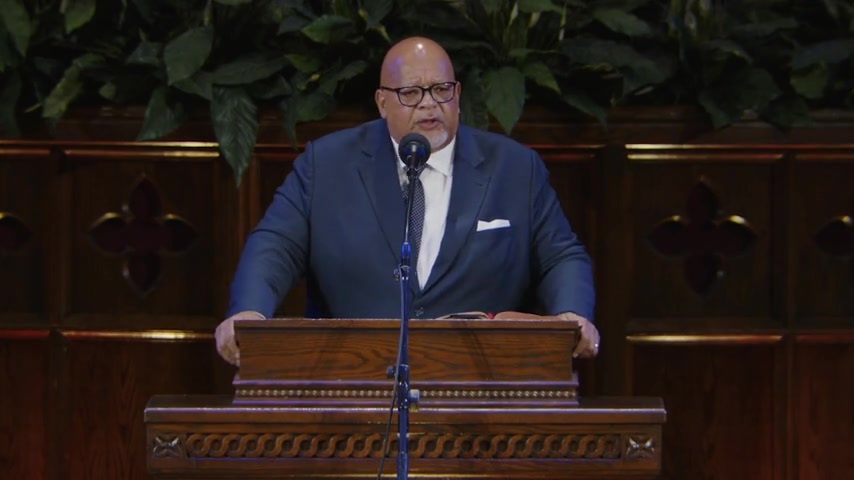
Pastor Philip Miller: In many ways, this letter is a kind of thank you note from the Apostle Paul. Because of his financial hardship under house arrest in Rome, the Philippian believers have pooled their resources and sent a love offering, a gift, to sustain Paul in his needs there in Rome. Epaphroditus was the courier that brought this gift to Paul, and now Epaphroditus is headed back home, back to Philippi with this letter in hand, this letter to the Philippians that we know it as. In many ways, this is a kind of thank you note. The only odd thing is that Paul never actually says thank you. I don't know if you've picked up on that, but it's one of the oddest thank you notes ever, actually. Listen to these excerpts here. He finally talks about the gift that they've sent him at the end of chapter four, but listen to these excerpts here. In verse 10, he says, "I rejoice in the Lord greatly that at length you have revived your concern for me." Verse 11, "Not that I'm speaking of being in need, for I have learned in whatever situation I am to be content." Verse 17, "Not that I seek a gift, but I seek the fruit that increases to your credit." Verse 18, "I've received full payment." It's an odd word for a gift. In Greco-Roman culture, it was customary when you received a gift to exchange a gift back of equal value. Paul does not do that, does he? At least not apparently. He doesn't send a gift, but in verse 19, he promises, "My God will supply every need of yours according to His riches in glory in Christ Jesus." Now, imagine if you were to write such a thank you note. Let's say me, right? I say, "Dear Grandma, I'm delighted that you finally remembered me and sent me that sweater you've been knitting. Not that I need it; I can handle the cold very well. I'm quite content in all circumstances, but it's good for you to send me presents. So, that's what's most important here. Please consider this a receipt of payment of your debt. And there's no gift for you this year, but I know God will supply whatever it is that you need. You are loved more than you know, Philip." Worst thank you note ever, right? What is going on here in this text? Well, in the Greco-Roman world, gift-giving and exchanging was an important part of the social fabric. There were customs and expectations that attended to the giving of these gifts. If you did receive a gift, you were expected to return the gesture with a gift of commensurate value. In these cases, if you were able to extend a gift of equal value in return, you did not say thank you. That was the first-century convention. You were on parity, on equal social footing in the exchange. Therefore, you were to acknowledge the gift and offer a gift in response. That's how it worked. You did not say thank you. Now, if you were unable to repay the gift, to give a gift of equal status, what happened was you fell down the social ladder in terms of everyone's appraisal of your standing in society. You became a beneficiary, and the other party became the benefactor. In other words, there was a power differential between the two parties created by your inability to give another gift in return. In such cases, you did say thank you, along with conveying a sense of indebtedness to your benefactor. So you would say something like, "We are forever grateful. Thank you so very much. How could we ever repay you? We are at your service." But you'll notice that Paul is not playing by the normal rules in this passage. He's received an extraordinarily generous gift from the Philippians, and he has no way to reciprocate, does he? He has no money, he has no job, he's under house arrest. He has limited options. So what we would expect for him to do according to Greco-Roman convention is to acknowledge the beneficiary situation, that he is grateful and indebted to the Philippians and their generosity. But that's not what he does, does he? He writes this letter as if he's on parity with them, equal social footing. There's no thank you note, there's no "I'm at your service." He responds to them as if he has given them a gift of equal value in return. As far as we can tell, there's no gift in kind enclosed with this letter. So what is going on? What's going on? The only way to actually make sense of Paul's response within the social milieu of the day is if he really is giving them a gift of equal value. But what could he possibly be giving them that is on par with this generous monetary gift that they've given him? What could it be? Well, you're going to have to wait for it. It comes at the end. But let me just give you a hint: there's earthly monetary treasure, and there's heavenly spiritual treasure. One has immediate short-term value; the other is infinitely more valuable in the long run. And so today, Paul's going to center in on these things. So he's going to show us the inside scoop on how we, you and I, can be truly rich this morning. So grab your Bibles; we're going to be in Philippians chapter four, verses 10 down to 23. You'll find today's reading on page 982 in the pew Bible there by your knees. Today, we're going to see that those who are truly rich value three things: the freedom of contentment, the power of generosity, and the treasures of eternity. The freedom of contentment, the power of generosity, and the treasures of eternity. Would you bow your heads? Let's pray and ask the Lord to teach us today. Father, as we examine here what it means to engage in resources with money in a way that would honor you, Father, we have a tendency to put up our guard. It's our money; it's our stuff, or so we think. And we feel the compulsion, the draw of your claim over our lives and over our things. So Father, help us not to resist but to open our hearts to you. Teach us how to live in light of the Kingdom of God and the values of heaven today. Make us truly rich in Christ, we pray. For His name's sake, Amen. So first of all, the freedom of contentment. Chapter four, verse 10: "I rejoiced in the Lord greatly that now at length you have revived your concern for me. You were indeed concerned for me, but you had no opportunity." Pause for a moment. He says, "Look, my imprisonment has given you an opportunity to express your concern for me. This gift that you've given has caused me to rejoice in the Lord greatly. I've told you rejoice in the Lord, and I'm greatly rejoicing in the Lord because my situation, my need, my crisis here in Rome has sparked the occasion for your generosity and now my joy." But don't mistake my meaning. Verse 11: "Not that I am speaking of being in need, for I have learned in whatever situation I am to be content. I know how to be brought low, and I know how to abound. In any and every circumstance, I have learned the secret of facing plenty and hunger, abundance and need. I can do all things through Him who strengthens me." There it is, one of those coffee cup verses we've talked about that we rip out of context and apply to everything in life. "I can do all things through Christ who strengthens me. I can get that great dream job. I can be rich and famous. I can lose that weight." He's not talking about that, is he? He's talking about the secret of contentment in the impoverishment of prison. This is a very different context than the way we typically use this verse. He says the secret to contentment is knowing that Christ is enough. Christ is enough. His strength is my portion, His presence is my sustenance, His life is my life. So the money can come and go, you see. In the good times, I've got Jesus, and in the bad times, well, I've got Jesus. In feast or in famine, give me Jesus. That'll be enough. This is so very different than the way we tend to relate to money, isn't it? For most of us, when it comes to money, the very last word that might be associated is contentment. We run after money in our culture, don't we? We want it, we work hard for it. And in the best moments, we want that money so we can take care of our families. But money also messes with us, doesn't it? Money can make us insanely jealous and envious and discontented in life. We're tempted to buy stuff we don't need with money we don't have to impress people we don't even know to get happiness we can never buy. Which is why three-quarters of American households are in debt. We're living paycheck to paycheck; we are slaves to our lenders. And even if we do get a windfall of money in life, contentment is still elusive, isn't it? There's always more; got to keep up with the Joneses. Does anyone know who the Joneses are? I hate keeping up with them, but they have everything: exotic vacations, luxury cars, second homes, big rings, designer clothing, investment portfolios. They bought Bitcoin at 200—what on earth? And then we get addicted, don't we, to our comforts and our conveniences and our ease. We become scared once we have something, scared we're going to lose it. We hold onto it way too tightly, and we're full of anxiety. Don't you see? We think we own our money, but then our money owns us. We think money will give us life, but we end up giving our lives to get it. We think money will be our servant when it turns out it's our master. And money is a dangerous master. It will chain you to your debt, it will addict you to your lifestyle, and it will capture you with the fear of losing what you have. Money is a dangerous master. But Paul says there's another way. There's a way of contentment, there's a way of freedom, there's a way of true riches. And the truly rich choose to live with open hands. When Jesus is our greatest treasure, we can live with open hands because the Lord gives and the Lord takes away, but blessed be the name of the Lord. And I can do all things through Him who gives me strength, whether I'm rich or poor, whether I'm well-fed or hungry, whether I've got a windfall or I'm cash-strapped. I can do all those things through Christ who strengthens me. Why? Because there are resources in Christ beyond anything money can buy, friends. Money offers security, but there's no security like belonging to Jesus Christ forever. No one can take that away from you. Money offers some satisfaction, but friends, there's no satisfaction better than knowing that I matter to the God of the universe and I will stand forever with Him in great joy. Money can offer significance of some kind, but there's no greater significance than to be loved and esteemed by my Heavenly Father as His beloved son. Friends, there are far greater resources than money could ever provide in Jesus Christ. The most penniless Christian in Jesus has an eternal wealth that surpasses the net worth of Elon Musk, Jeff Bezos, and Bill Gates combined. Do you believe that? And the Apostle Paul is saying that if we can learn to value and live in those resources, those realities, metabolizing all that is available to us in Jesus Christ, that is the secret of contentment. That's the way that we can live with open hands. Because when we live from the resources of heaven, money's just money then, you see. It's a gift from God. He owns it all. Sometimes we have a lot, sometimes we don't. But our true riches in the universe are already secured in Jesus Christ. Friends, don't you realize what it means that heaven's streets are paved with gold? What does that mean? It means the very most precious commodity we have on earth is pavement in the glory of heaven. When we know we've got the resources of heaven, we can live with open hands, friends. We can be content, we can be free. It's the freedom of contentment. It's beautiful. O that we would live there. Secondly, the power of generosity. Verse 14: "Yet it was kind of you to share in my trouble. And you Philippians yourselves know that in the beginning of the gospel, when I left Macedonia, no church entered into partnership with me in giving and receiving except you only. Even in Thessalonica, you sent me help for my needs once and again." So apparently, when Paul left Philippi, which is located in Macedonia, and went on his way throughout the Mediterranean planting churches, the Philippian believers financially supported him. They were his partners in ministry. And they were the only church that did this, but they sent repeated gifts, more than once and again, he says. And so that's why it means so much to Paul that they've resumed their giving to him. Verse 17: "Not that I seek the gift, but I seek the fruit that increases to your credit. I've received full payment and more. I'm well-supplied, having received from Epaphroditus the gifts you sent, a fragrant offering, a sacrifice acceptable and pleasing to God." Now, this is very interesting, isn't it? He says, "Not that I seek your gift, but I seek the fruit that increases to your credit." In other words, this is less about my needs being met and more about your gift being given. There's a fruitfulness in all of this which is to your credit that you would not have if you did not give. There is a fruit that is born in the life of a person who gives generously, and it's more important than any needs that are actually being met with the gift. Isn't that interesting? Paul's saying generosity changes us. Generosity changes us. Have you realized this? When you give, doesn't it make you become compassionate? Don't you? You're moved to respond to a need. You become empathic, full of empathy. You become sacrificial and loving and giving. In other words, when we give, we are becoming more and more like our Heavenly Father, who is our good Father, who loves to give good gifts to His children. And giving increases the spiritual fruit that is born in our lives. But not only that, don't miss the logic here. Paul says, "I've received your payment." This is like a debt, isn't it? They gave him money, and it was a debit in their account, right? They gave him money, but it was an increase, he says, to their credit—also a financial term. So in other words, they have less money but more credit. Do you see this? Less money but more credit. To earthly eyes, their net worth has gone down because they gave. But in the eyes of heaven, their worth has risen. It's gone up. It is, as Paul says, a fragrant offering, an acceptable sacrifice, pleasing to God. In other words, what Paul is saying is he goes, "Look, it's not what I want from you that matters; it's what I want for you that counts." In sharing in my troubles like you have just done, you have offered up a sacrifice that delights the Lord and is, to use the language of Jesus, storing up treasure in heaven. Because the truly rich know it is more blessed to give than to receive. You'll know that's a line that Jesus said: "It is more blessed to give than to receive." You can read that in Acts 20, verse 35. The blessing of the giver comes both now and later. The blessing now is that giving actually changes us. It bears fruit in our lives. When we give, it is one of the things that God uses to conform us to the image of Christ. When we give ourselves away, we actually get ourselves back. We become beautiful, generous souls, increasingly like Jesus in every way. The second blessing comes later, and that is what Jesus refers to as storing up heavenly treasure. The biblical principle is that the more we give away in service of Christ and His gospel, the more we receive when we stand with Him in glory. That's the economy of heaven. A debit on earth, a credit in heaven. It's the power of generosity. Thirdly, we see here the treasures of eternity. Verse 19: "And my God will supply every need of yours according to His riches in glory in Christ Jesus. To our God and Father be glory forever and ever. Amen." He says, "You have generously and sacrificially supplied my every need, Philippian believers, and now my God will supply every need of yours." And once again, just to be clear, he's talking about spiritual provision mainly here. This is according to His riches in what? Not money, His riches in glory in Christ Jesus. That's what we're talking about. He says, "There's glory for you, Philippian believers, in Christ Jesus. You've met my physical needs; my God will meet your spiritual needs in abundance according to the riches of His glory in Christ Jesus." That will be your supply. I want you to live from this glory, draw on the strength of this glory. I want you to delight in all that is yours in Jesus Christ because it's an inexhaustible supply. His glory is forever and ever, Amen. Amen? You will never run out of the riches of glory that are His and now yours in Jesus Christ. You will never run out. Verse 21: "Greet every saint in Christ Jesus. The brothers who are with me greet you. All the saints greet you, especially those of Caesar's household." That's interesting. The grace of the Lord Jesus Christ be with your spirit. Isn't that beautiful right here at the end? There are followers of Jesus now in Caesar's household. Why? Because Paul is a prisoner of Caesar, and the gospel is advancing even in his chains. You cannot arrest the progress of the gospel. It is impossible. But we still haven't answered our question, have we? We still haven't answered the question we started with. Paul's mode of writing as we've gone through this passage now is clearly in keeping with the Greco-Roman customs associated with giving a reciprocal gift. There must be some reciprocal gift given in this exchange or this doesn't make sense. As we've seen at every point in this passage, Paul's focus is not on material resources but mainly on spiritual resources, right? Which are far more valuable than anything this earth has. So here's the question: could it be that Paul's lack of a thank you here is designed to help the Philippian believers realize that they are actually being sent a gift of far greater worth than any gift they gave Paul in the first place? Could it be that Paul writes with this enigmatic way in order to make them curious, to try to figure out where the gift is? That's what I think is going on. Now, what is it that Paul is sending as a gift to Philippi? What is it? Go back to chapter two, verse 19: "I hope in the Lord Jesus to send Timothy to you soon." Chapter two, verse 25: "I thought it necessary to send to you Epaphroditus, my brother and fellow worker and fellow soldier, and your messenger and minister to my need." Friends, the gifts that Paul is sending to the Philippians are people. His most precious comrades. He is sharing their lives with them as gifts. He is sending Timothy and Epaphroditus to spur the Philippian believers on to love and good deeds so that they might be formed into the image of Christ, that they might stand pure and blameless in glory before God at the day of Christ Jesus. See, the Philippians aren't Paul's benefactors. They've supplied his material needs, yes, but he is supplying their spiritual needs as he sends these examples, these models, these embodied examples and representatives of what it looks like to live a life devout to Christ. If anything, he's the benefactor in this arrangement, you see. But that's not all. Not only is Paul sending two individuals to the Philippians, I want you to see this. Remember in the second verse of Philippians chapter one? Philippians chapter one, verse two, he says—he opened up and said, "Grace to you," right? "Grace to you." Here at the end, chapter four:23, he says, "Grace be with you." So in the beginning of the book, "Grace to you." It's coming to you, it's approaching. And now at the end, "Grace be with you." It's remaining with you. So what is the grace that was coming to the Philippians as they opened up Paul's letter and which now will remain with them having read through it to the very end? What's the grace? Don't you see? Paul's letter is itself grace. The letter itself is grace, a gift. It is the inspired word of God. These are words of grace. This letter is a gift. Grace means gift, right? Paul is sending to the Philippian believers on one hand eternal souls and on the other hand the eternal word of God. These are the means of grace, the gifts that Paul is giving. And there are only two things that last forever: God's word and people. God's word and people. These are infinite, eternal gifts that will not rust, cannot be stolen, will never be lost. These are priceless treasures, infinite in value. They are benevolent gifts. And the Philippians' gift to Paul was generous, but Paul's gift to them is full of glory and grace. Do you see that? And friends, truly—the truly rich prize the eternal value of God's word and God's people. The truly rich prize the eternal value of God's word and God's people. Friends, there is no greater return on investment than to invest in God's word and God's people. Amen? No other investment is more secure. No other significance could be higher. Nothing could yield greater satisfaction in life and eternity. There's nothing better than celebrating the joy of changed lives. Amen? And that happens when we invest ourselves and our resources in God's word and God's people, the two things that last for eternity. Paul writes to Timothy—the same Timothy we're talking about—later in life, in 1 Timothy 6, verses 7 to 19. I think these words are really good for us today: "As for the rich in this present age, charge them not to be haughty, nor to set their hopes on the uncertainty of riches, but on God, who richly provides us with everything to enjoy. They are to do good, to be rich in good works, to be generous and willing to share, thus storing up treasure for themselves as a good foundation for the future, so that they may take hold of that which is truly life." Don't you want that? Our takeaway is the words of Jesus, Matthew 6:21: "Where your treasure is, there will your heart be also." Where your treasure is, there will your heart be also. Friends, where's your heart? Where's your heart? Not in theory, not ideally, not as you wish it to be, but where's your heart really? Let's hold nothing back from our God. He's held nothing back for us. Isn't that true? Let's pray. Father, we're reminded of what really matters in a text like this. we so often live on the plane and in the values of this world, forgetting what is supremely valuable, where our treasure really lies, what really matters in the very end. Would you free us from the mastery of money? Would you form us into the image of Christ as we give generously? Would you help us to value what you value: your people, your word, the advance of the gospel? Everything else is just play money, really. It matters, and yet it doesn't. True riches are something we can never lose in this world that is kept in heaven for us, an inheritance that can never spoil or fade. Help us to live for glory, live for the treasure that is you and all that you have for us in Christ. We give you ourselves. We hold nothing back. We are yours. We pray this in Jesus' name, Amen.
Guest (Male): On today's Moody Church Hour, we heard Pastor Philip Miller teaching on the basics of giving, sermon number eight in a series on back to the basics. Next week, don't miss the first in a series showing amazing grace in the Old Testament. We'll be in the book of Ruth, hearing about mercies in the shadows. Don't miss part one. Knowing why Christ transcends all other religious founders is key to defending your faith in a confused culture. Erwin Lutzer has written Christ Among Other Gods, a whirlwind tour of comparative religions showing why Christ is supreme. This book will be sent as our thank you when you give a gift of any amount to support the Moody Church Hour. Just call us at 1-800-215-5001. That's 1-800-215-5001. Online, go to moodychurchhour.com. That's moodychurchhour.com. Or write to us at Moody Church Media, 1635 North LaSalle Boulevard, Chicago, Illinois, 60614. Ask about Christ Among Other Gods when you write or call. Join us next week for another Moody Church Hour with Pastor Philip Miller and the congregation of historic Moody Church in Chicago. This broadcast is a ministry of the Moody Church.
Related Episodes
The Basics Of Peace
Sunday, August 23
The Basics Of Maturity
Sunday, August 16
The Basics Of Identity
Sunday, August 9
Related Videos
About Moody Church Hour
This Sunday morning program provides a meaningful worship service for those far from God or unable to attend a local church. With insightful teaching from Pastor Philip Miller and joyous congregational worship, you’re invited to join Jesus on the journey of a lifetime.
About Pastor Philip Miller
Philip Miller is the 17th Senior Pastor of The Moody Church. Philip holds a B.A in Pre-Seminary Bible from Cedarville University (’04) and a Th.M. in Pastoral Leadership and New Testament Studies from Dallas Theological Seminary (’10). His wife, Krista, also holds an Th.M. degree from DTS. They have four children: Claire, Violet, Cora, and Jude.
Philip is a visionary leader with over twelve years of ministry experience, including three at Christ Community Church in the western Chicago suburbs and nearly seven as Senior Pastor at Westwood Baptist in Olympia, WA. He believes people flourish as followers of Jesus when they live deeply in the gospel, experience the healing of true community, and join Jesus on mission in their world. He is committed to cultivating a gospel-centered church that welcomes spiritual explorers, promotes gospel clarity in culturally engaging ways, inspires passionate worship, fosters deep spiritual vitality, empowers people to holistic discipleship, and catalyzes a multiplication movement of gospel renewal both locally and globally.
Philip enjoys cycling and all things outdoors, Garrett’s Carmel popcorn, Lou Malnati‘s deep dish pizza, and Henry Weinhard‘s root beer. For more information about Philip and his family, visit moodymedia.org/pastorphilip.
Contact Moody Church Hour with Pastor Philip Miller
Mailing Address
Moody Church Media
1635 North LaSalle
Chicago, IL 60614
Toll-free Phone Number
1.800.215.5001
Monday – Friday
8:00am – 5:00pm CST
Fax Number
1.312.642.4904


