In Prison For Christ – Part 1 of 2
Ministries > Running To Win with Dr. Erwin W. Lutzer
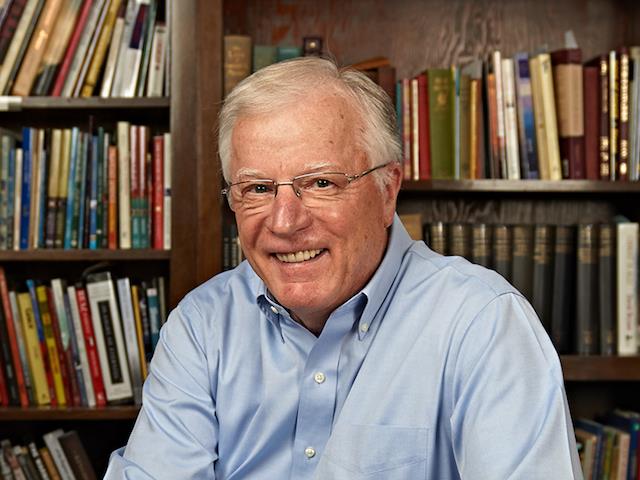
Everyone who has failed hopes for a second chance and a new name. Paul met a runaway slave named Onesimus and led him to Jesus. In this message from the book of Philemon, Pastor Lutzer explains how the Gospel makes the useless useful. What would it mean for our debts to be charged to someone else’s account?
Guest (Male): Let us run with endurance, the race that is set before us, looking to Jesus, the founder and perfecter of our faith. In the Roman Empire, a vast number of people were slaves. While in prison, Paul wrote to a friend about a runaway slave he had led to Christ. Today, a glimpse into the heart of Paul, like none other in the New Testament. Stay with us. From The Moody Church in Chicago, this is Running to Win with Dr. Erwin Lutzer, whose clear teaching helps us make it across the finish line. Pastor Lutzer, does Paul in any way condone slavery in his writings from prison?
Dr. Erwin W. Lutzer: Dave, that's a very interesting question. And of course, even though we can't discuss it in detail, I want to emphasize this, that the Apostle Paul wrote a letter to Philemon, that's the letter that we're talking about, regarding Onesimus, a slave who had run away. And Paul had led this slave to Jesus Christ, and then Paul put these words in the letter. He says, if you have received me, receive him as you would receive me. As a matter of fact, Paul calls him not just a slave, but a beloved brother. So the Apostle Paul was doing all that he possibly could to elevate the role of this slave and to make his owner realize that he should be on the same level as the owner himself. The Apostle Paul was taking a slave, elevating his dignity, and saying that he should be received not only as a brother, but as a fellow partner in the gospel. And we're so thankful that Christianity stands against slavery because every person is created in the image of God. Well, this is the last week we're making a very special resource available for you. It's a book I've written entitled *Failure: The Backdoor to Success*. One of the things that I discuss is what is success from God's standpoint. I talk about failure. I talk about people who made wrong decisions, and how God even turned wrong decisions ultimately into a blessing. For a gift of any amount, we're making it available for you. Here's the contact info. Go to RTW offer.com. That's RTW offer.com or pick up the phone and call us at 1-888-218-9337. Find hope in the midst of your failures. And now let us go to the pulpit of Moody Church. I'm going to begin today by asking you to turn to the book of Philemon. Now, the question is, how can you find Philemon in your New Testament? It's very difficult to find because it's a book of only 25 verses. But here's a clue. Find the book of Hebrews. That's usually very easy to find, with all of its chapters, a much longer book. And then when you get to the book of Hebrews, turn to the beginning and then go a little bit beyond that because Philemon is the book just before the book of Hebrews. That's the way you find it. It's necessary for you to have the text in front of you, given what we're going to talk about. The Apostle Paul spent a great deal of his life in prison. Now, at least two years in Caesarea, and another two years in Rome. And in between also there were other imprisonments. So we don't know what the total is, but notice with the book of Philemon before you, notice how he begins. He says, Paul, a prisoner for Jesus Christ. Do you notice how Paul believed that God was sovereign over him, that even what the devil did was actually done for God's glory, even if it meant unjust imprisonment? Imagine that faith. And I want to emphasize that when we hear today that Christians are being persecuted, we should do all that we possibly can to pray for them, to intercede for them, that they might know that even they as believers are there by divine appointment. That takes faith, but Paul had that kind of faith. Now, what we're going to do today is to look at this very short letter that the Apostle Paul wrote. And I believe that for many of us, it's going to be very interesting and enlightening. You know, the Apostle Paul here in this short letter reveals his heart, like he does not do in any other of his epistles. I mean, here is a letter that he writes where we see, and when we also learn how to ask someone to do a favor for you. It's all here in the text. But there's another reason why this book is so important, and that is it deals with the problem of slavery. Now, it's fashionable today to say, "Oh, you know, the Bible condones slavery." And because it condones slavery, and we don't accept slavery anymore, why should we accept the biblical view of sexuality? That's the narrative that is in our culture, and we're going to end up dealing with that narrative today. And then in addition to that, we're going to see the power of the Gospel in individual lives and in your life as well, and you're going to leave encouraged to trust in the Lord. That's where we're going. I believe that this very short book has within itself the power and the message that is necessary for the church, which in and of itself, could wipe out slavery. Well, we'll see whether or not it is so. Now here's what we're going to do. I'm going to give you the context of the book, and then we're going to walk through it, and then we're going to deal with the issues that I have raised. This happens to be number five in a series of messages titled *The Legacy of a Converted Man*. When you are converted, the change is so transforming, as it was in the life of the Apostle Paul, that everyone notices it. Your whole priorities change, and suddenly even your desires because conversion is a great work of God. Well, with that background, what is the background of the book of Philemon? The book of Philemon. The answer is simply this, that evidently, there was a runaway slave by the name of Onesimus. I shouldn't say evidently because there was a runaway slave by the name of Onesimus. His owner was Philemon. And Philemon was a great man in the church in Colossae. Philemon, the church in fact, met in his house. And somehow, and we don't know exactly how, but this slave by the name of Onesimus left Philemon's residence and made his way to Rome, and there he met the Apostle Paul. Paul leads him to faith in Jesus Christ, and then sends him back to his master. Now, with that background, let's walk through the text and we'll see as it develops. The Apostle Paul says, for example, Paul, a prisoner for Jesus Christ and Timothy our brother, to Philemon, our beloved fellow worker, and Apphia, evidently his wife, our sister, and Archippus, perhaps their son, our fellow soldier, and the church in your house, grace to you and peace from God our Father and from the Lord Jesus Christ. And now Paul begins to thank God for Philemon. Notice he says, "I thank my God always when I remember you in my prayers because I hear of your love and of the faith that you have toward the Lord Jesus and the saints." Could I just stop there for a moment? Today there are so many people who say, "Well, you know, I'm into Jesus or I'm into God. I have this personal relationship with God, but I have really no connection to God's people." You may go from church to church, you never sink down roots, you never become involved, and you think that this is okay. Notice that the Apostle Paul says, "Your love of the Lord Jesus Christ and the people of Jesus Christ, His sons and His daughters." I'm sorry, but if you become a member of God's family, you have to put up with his kids. And sometimes they're not easy to put up with, but just think of your family, and you'll understand that family sometimes have their squabbles, they have their weaknesses, but the commitment to God's family follows a commitment to Jesus Christ. And Paul goes on to say, "I hear of your love for the faith that you have toward the Lord Jesus and the saints, and I pray that the sharing of your faith, this is the generosity of your faith, may become effective for the full knowledge of every good thing that is in us for the sake of Christ." And then he says, "For I have derived much joy and comfort from your love, my brother, because the hearts of the saints have been refreshed through you." Have you ever met anybody like that? I know I have in my life. People that you long to be in their presence, you want to connect with them because when you leave, you are encouraged, you are refreshed, and you're so much better for having met them and connected with them. I hope that you have friends just like that, and even our small group ministry is designed to help people to connect, and all of our other ministries. Remember the statement that we have, it is a promise statement. Moody Church is a trusted place where anyone can connect with God and others. And through that connection, we are strengthened. Paul says in Colossians that as you are strengthened with one another, you enter into the inheritance that is yours in Christ. And I don't think that we can get to that inheritance without that kind of involvement. So Philemon is a great man, great Christian, evidently quite wealthy. The church meets in his house. But now we get to the matter of Onesimus. Let's read what the Apostle Paul has to say here as he begins pleading for this boy. I call him a boy, we're not sure that he was a young man, but I tend to think he was. So let's read the text. Verse 9, "Accordingly, though I am bold in Christ to command you to do what is required, yet for love's sake, I prefer to appeal to you, I, Paul, an old man and now a prisoner for Jesus Christ. I appeal to you for my child Onesimus, whose father I became in my imprisonment. Formerly he was useless to you, but now he indeed is useful to you and to me. I am sending him back to you, sending my very heart. I would have been glad to keep him with me in order that he might serve me on your behalf during my imprisonment for the Gospel, but I preferred to do nothing without your consent in order that your goodness might be not by compulsion but of your own free will. For this perhaps is why he was parted from you for a while that you might have him back forever, no longer as a slave, but more than a slave, a beloved brother, especially to me, and how much more to you, both in the flesh and of the Lord." We have to stop right here for a moment. The Apostle Paul says that this young man met him there while Paul was in prison in Rome. Now, when the Gospel of Acts ends, the story of the early church, it ends with Paul in Rome, and he's actually living there at his own expense under house arrest. And the Bible says that people were coming and going. So let's try to pick up the story as best we know it. Here's Onesimus who is a slave in Colossae. Now, Colossae is in the land of Turkey. That's a long, long way from Rome. But we can imagine that this young man decided to steal some goods from his master. He took some money with him so that he'd be able to make it all the way to Rome and blend in with a large population and nobody would know about him and he'd find his own way. But somehow, and we don't know how, he connected with the Apostle Paul while Paul was in prison. And Paul led him to saving faith in Christ. Paul says, "I have become his father in the Lord and he is now my son." That's imagery in the New Testament for indicating, when you lead someone to Christ, you become their father or their mother, as the case may be, because of the family relationship, and you were the key to them coming to faith in Christ. So Paul says, "I have led Onesimus to the Lord." And notice that the text says, and this is very important, verse 11, "Formerly he was useless to you, but now he indeed is useful to you and to me." You don't get this in English, but in the Greek text there's a play on words because the name Onesimus means useful. People used to name children in accordance with the meaning of the names, and there was a time when Onesimus was not at all useful to his master. In fact, evidently he stole from his master. But now because of his conversion, he's beginning to live up to his name. And even though he was named useful and was useless, now he is really useful, both to Paul and to Philemon. You know, this young man must have really been quite a quite an encouragement to Paul because Paul says, "I wish I had been able to keep him here because he serves me here in prison." You've met those kinds of people, you can depend on them, their faith is evident, and they they are willing to play the role of a servant. And that's what Onesimus was willing to do under the good hand of God. So Paul says, first of all, that he's a convert. Yes, he ran away, and now Paul begins to seriously plead for Onesimus. And what we must do is to see how he does it. First of all, he says, and we read the text a moment ago, that he should be welcomed back by Philemon, verse 16, "No longer as a slave, but more than a slave, as a beloved brother." Now that he's been born into God's family, he is a brother, and he's a beloved brother. Yes, I know he had a history, but the fact is there is restoration, there is forgiveness, and he is to be received as a brother and more than that. But especially to me, and how much more to you, both in the flesh and in the Lord. Verse 17, "So if you consider me your partner, receive him as you would receive me." Could you imagine that the Apostle Paul, if he were to get back to Colossae, and at the end of the book, he suggests he might be able to. Could you imagine what Philemon and his wife Apphia? In fact, the Bible says Paul writes in verse 22, "Prepare a guest room for me." And they would. Because this, after all, was the famous Apostle Paul, whose reputation was known throughout the then known world. And of course they'd welcome him greatly. Paul says, "Receive him as you receive me." You know what that means? That means Philemon says to his wife, "We have to prepare the guest room because that's where Paul would sleep, and that's where Onesimus is going to sleep tonight." Well, what about the money that was stolen? You'll notice that Paul says, "If he has wronged you," verse 19, "If he has wronged you or owes you ought," verse 18, "charge that to my account." Paul says, "Put it on my credit card. Whatever it is that he took, whatever wrong he did, whatever money you lost as a result of the fact that he was running away, charge it to me." This wasn't just simply talk. The Apostle Paul had lots of resources. In fact, as I mentioned in the book of Acts, I read it last night, where it says that Paul lived in Rome at his own cost. So he had resources, and he says, "Now, if you want to be paid back, you know, just let me know how much it was, and I'll cover for him." So the Apostle Paul makes this incredible statement, "Charge that to my account. Put it on my credit card." Well, he ends this short letter by talking about his plan, and now I'm in verse 21. He says, "Confident of your obedience, I write you, knowing that you will do even more than I say. At the same time, prepare a guest room for me, for I'm hoping that through your prayers, I will be graciously given to you." We don't know whether or not Paul ever fulfilled this request, whether or not he got out of prison in Rome. There were I think two imprisonments, it gets a little complicated because the book of Acts isn't clear exactly how Paul's life ended, though tradition says that he eventually was beheaded in Rome under Nero. So that was his history. But here's the Apostle Paul pleading for a runaway slave. Well, I've walked you through the text, but what does this have to do with us? And what are the seminal lessons that are transforming that we should remember? First of all, this is a marvelous illustration. A marvelous illustration of the power of the Gospel. When Paul says, "You know, he was useless to you, but he's become useful, he's living up to his name." What he has accentuated is the fact that somebody who really was disobedient and evidently a thief has been changed by the power of the Gospel. So that he lives differently and you can depend upon him now, Philemon. And that's what God wants us to do. You know, in the Bible, God is constantly saying to us, "Live up to your name." If you say that you are a Christ follower, then follow Christ and live accordingly. There are some people, and maybe some are listening to me right now, it would be better if nobody knew that you were a Christian because you're not living up to the name of Christ. You remember what God said, what Jesus said to Peter? He said, "You are called Simon," this is in John chapter 1, "You are called Simon, but you shall be called Peter. You're going to be called a rock." When God saves you, He renames you and gives you a whole new sense of identity as to who you are. That's what God does to those whom He saves. You know, there is a story that comes to us from the days of Alexander the Great. Evidently, there was one soldier in the army that was really a coward and backed out of a difficult situation.
Guest (Male): That was
Related Episodes
Dying with Christ – Part 1 of 2
Thursday, October 8
In Prison For Christ – Part 2 of 2
Wednesday, October 7
On Trial For Christ – Part 2 of 2
Monday, October 5
Related Videos
About Running To Win
Running the race of life is hard. But with the Bible front and center and a heart to encourage, Pastor Erwin Lutzer presents clear Bible teaching, helping you make it across the finish line. Since 2011, this 25-minute program has provided a Godward focus and features listeners’ questions.
About Dr. Erwin W. Lutzer
Dr. Erwin W. Lutzer is Pastor Emeritus of The Moody Church where he served as the Senior Pastor for 36 years (1980-2016). He earned a B.Th. from Winnipeg Bible College, a Th.M. from Dallas Theological Seminary, a M.A. in Philosophy from Loyola University, and an honorary LL.D. from the Simon Greenleaf School of Law (Now Trinity Law School).
A clear expositor of the Bible, he is the featured speaker on two radio programs: Running to Win—a daily Bible-teaching broadcast and Songs in the Night—an evening program that’s been airing since 1943. Running To Win broadcasts on a thousand outlets in the U.S. and across more than fifty countries in seven languages. His speaking engagements include Bible conferences and seminars, both domestically and internationally, including Russia, the Republic of Belarus, Germany, Scotland, Guatemala, and Japan. He has led tours to Israel and to the cities of the Protestant Reformation in Europe.
Pastor Lutzer is also a prolific author of over seventy books, including the bestselling We Will Not Be Silenced, One Minute After You Die, and the Gold Medallion Award winner, Hitler’s Cross. Pastor Lutzer and Rebecca live in the Chicago area and have three grown children and eight grandchildren. Connect with Pastor Lutzer on X (@ErwinLutzer) or moodymedia.org.
Contact Running To Win with Dr. Erwin W. Lutzer
Mailing Address
Moody Church Media
1635 North LaSalle
Chicago, IL 60614
Toll-free Phone Number
1.800.215.5001
Monday – Friday
8:00am – 5:00pm CST
Fax Number
1.312.642.4904


