Spiritual Gifts pt 4
Ministries > Somebody Loves You with Raul Ries
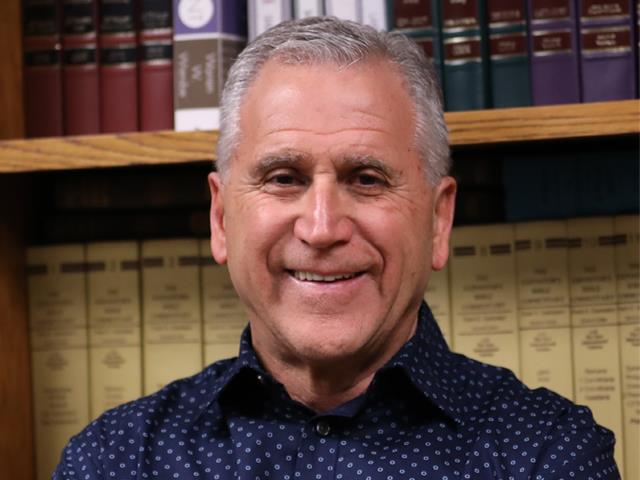
Today as Pastor Raul zeros in on the spiritual gifts of prophecy and speaking in tongues. You’ll be challenged to prioritize the edification of those around you. You’ll see that with the guiding presence of God’s Spirit, you can build up your fellow believers through the proper use of the gifts He’s given you. Learn more on Somebody Loves You with Raul Ries
References
Raul Ries: As God has spoken to me, as I am bringing myself into maturity in Jesus Christ and I'm learning about the gifts of the Holy Spirit and the place that I have in the body of Christ, wanting Christ to use me in whatever capacity that he wants to use my life and I yield my life to him completely and say, "Lord, here am I, use me and send me."
Guest (Male): Welcome to Somebody Loves You Radio, the Bible teaching ministry of Raul Ries in Diamond Bar, California. We're thrilled to have you with us for the conclusion of our series celebrating the Holy Spirit's power in the life of the believer. Today, Raul zeros in on the spiritual gifts of prophecy and speaking in tongues. He'll challenge you to prioritize the edification of those around you. We'll see that with the guiding presence of God's Holy Spirit, we can build up our fellow believers through the proper use of the gifts he's given us. Here's Raul Ries with part four of our study, Spiritual Gifts. Join us in 1 Corinthians chapter 14.
Raul Ries: In the Corinthian church, there was this huge problem. And the problem is that God wanted to give as much as possible to the church in the gifts of the Holy Spirit. But the church had become so carnal and so sensual that the church actually came to a place of grieving the Holy Spirit of God. The word to grieve is a very interesting word in the Greek. It means to bring pain to the personality of the Holy Spirit. So when Paul comes to the 12th, 13th, and 14th chapter of the book of Corinthians, Paul is wanting to let the church know that the gifts of the Holy Spirit not only were for that time, but they are for today. And he begins to describe these gifts that God has given to the body, the church of Jesus Christ. Notice once again in verse one of chapter 14, in the first part he says, "Pursue love and desire spirituals." And he doesn't call them the gifts of the Holy Spirit, but in the literal Greek, it's called "spirituals," not even gifts. They're called spirituals. But he says, "Especially I want you to seek," notice, "especially that you may prophesy." Now, I don't believe that there are prophets today. We see the prophets in the Old Testament times. But in the New Testament, what he's talking about the gift of prophecy is literally the teaching of the word of God to the body of Christ, where everyone can be instructed and everyone can be built up. Verse two he says, "For he who speaks in a tongue does not speak to men but to God." I want you to underline that. Because when we speak in tongues, we never speak to men. We don't understand what you're speaking. Imagine if somebody got up right now and spoke in Chinese and we don't have any Chinese interpreters. We would say, "Man, what in the world did he say by that?" We would not know unless there was an interpreter. Then we would know what the interpretation would be. But when someone receives the gift of tongues, Paul is declaring that the gift of tongues is personal and is to be used in your privacy of your own chamber as you pray to God. It is not to really be exercised in an assembly of this size. He'll get to that in a moment. For no one understands him; however, in the spirit he speaks what? Mysteries. You see, Paul tells you exactly what the gift of tongues is. So the gift of tongues is given for you personally to speak to God when you pray. So we are to pray. Now, if you haven't received the baptism of the Holy Spirit, which is love, and if God has baptized you with tongues, praise the Lord, use your tongue. But if you haven't received the tongues, you don't have to feel like you're less of a citizen in the kingdom of God. We're all equal in the eyes of the Lord, for the greatest gift is love. That's the greatest gift that every one of us can not only have, but that's the only way that any one of my gifts can actually be exercised if I have the true love of Jesus Christ. So Paul is teaching us. Verse three: "But he who prophesies speaks what? Three things: edification," which means what? Building up. That's what the word of God does. It builds you up, it exhorts you, and it comforts you. Those are the three things that the teaching of the word of God does when you come to church. Why? Because maybe you're coming to the church and you're bummed out and you've been having a bad day, but as the word of God is being given out to you, the Holy Spirit comes alongside and begins to speak to you. And what does he begin to do? He begins to build you up as a saint in the body of Christ. And then he exhorts you in areas that you maybe have been slothful in to get with it. And then after exhorting you, he brings you to the place where now he brings you into comfort and he begins to appease your heart as he begins to share with you how much he loves you and how much he cares for you as the teaching of the word of God is going on. And so when we leave the body of Christ, when we leave the place of teaching, we shouldn't really be bummed out, but we should be built up. That's the gift of teaching: prophecy, edification, exhortation, and comfort to men. Verse four, notice that prophesying builds up the church, but tongues edifies only the speaker. Verse four: "He who speaks in a tongue," notice, "builds himself up, but he who prophesies," notice, "builds up the whole church." I love it. Underline that. Builds up the whole church. Why? Because we can all understand what is being said as we're being exhorted, we're being built up, and we're being comforted by the word of God. Verse five: "I wish you all spoke with tongues but even more that you would prophesy." Notice the importance here of the gift that Paul has given to the church. "I wish that everybody spoke in tongues but greater is prophecy," you see, "than tongues. For he who prophesies is greater than he who speak with tongues unless indeed he interprets and the church may receive the edification or the building up." You see, otherwise it's of no value. "But now, brethren, if I come to you speaking with tongues, what shall I profit you unless I speak to you either by revelation or by knowledge, by prophesying or by teaching?" Notice what he says. He gives the illustration. I mean, what does it really profit? It doesn't profit. It only profits a person in their own prayer language as they're praying to God, between you and God. "Even things without life, whether flute or harp, when they make a sound, unless they make a distinction in the sounds, how will it be known what is piped or played?" That is, played with skill, you see. He puts us all together according to our gifts and our talents and then he uses us to bring glory and honor to himself. Then in verse eight he says, "For if the trumpet makes an uncertain sound, who will prepare for battle?" Imagine. I mean, in the Old Testament, it's a ram's horn and the ram's horn was used for many things. In the Old Testament, it was actually a call to battle, a call to watch on top of the roofs or on top of the walls of the city when the enemy was approaching. It was a type of an alarm to wake you up in the morning. It was a gathering together to come to temple worship. So it was a very important tool in the Old Testament: the trumpet or the shofar. He says, "So likewise you, unless you utter by the tongues words easy to understand, how will it be known what is spoken? For you will be speaking into the air." Underline that. You'll be speaking to the air. "There are, it may be, so many kinds of languages or dialects in the world and none of them is without significance." Notice what he says. "Therefore, if I do not know the meaning of the language, I shall be as a foreigner." The New King James uses foreigner, but the Old King James uses the word barbarian, bar-bar, in the Old Testament, "to him who speaks and he who speaks will be a barbarian to me. Even so you, since you are zealous for spiritual gifts, let it be for the building up of the church that you seek to excel. Therefore, let him who speaks in a tongue pray that he may interpret." He says, "Therefore, let him," verse 13 he says, "Therefore, let him who speaks in a tongue pray that he may interpret. That if I pray in a tongue, my spirit prays but my understanding is unfruitful. What is the conclusion then? I will pray with the spirit and I will also pray with understanding. I will sing with the spirit and I will also sing with understanding." Notice what Paul says here. That is speaking in such a way that what is he saying? That when we speak in a tongue, it's not only speaking to God, but a true interpretation of a true tongue is what? It's actually like a psalm or it's worship back to God. You see, it's all back to God. It's praising, glorifying the Lord. But it's not saying, "Thus saith the Lord, my little children, I the Lord God have called you to do this and that." That's not the way it is. Then he says this: "Otherwise, if you bless with the spirit, how will he who occupies the place of an uninformed say 'Amen'?" Think about that. If we start speaking in tongues and there's an unbeliever here, he'll say, "Man, what in the world are they saying?" "At your giving of thanks, since he does not understand what you say." Notice, underline it. When you speak in tongues and there's a true interpretation, what is it? Right there in verse 16. "At your giving of thanks, since he does not understand what you say." That's the true interpretation. "Lord, we bless you, we thank you, we glorify your name for being here tonight in our presence." You see, that would be the true interpretation.
Guest (Male): You're listening to Somebody Loves You Radio with Raul Ries. Visit somebodylovesyou.com and look through our resource store for instruction and inspiration to live a fruitful, God-glorifying life. And for Raul's response to your Bible questions or prayer needs, you can email in at [email protected]. Now back to more of our study on spiritual gifts.
Raul Ries: Verse 17: "For you indeed give thanks well, but the other is not built up." You see, you're giving thanks to the Lord in your tongue, but the other guy is saying, "Man, what in the world are they saying?" You're bringing confusion to them. "Yet in the church," here it is, here's the rule, "I would rather speak five words with my understanding that I may teach others also than to speak ten thousand words in a tongue." Underline that. What is Paul saying? He's forbidding tongues in the church. You see? And then watch what he says. He sets up the guidelines now. "Brethren, do not be children in understanding; however, in malice be babies, but in understanding be mature. In the law it is written: 'With men of other tongues and other lips I will speak to this people; and yet for all that, they will not hear me'." And a lot of times, people will take this prophecy that is given to us here in verse 21. Which again, Paul in verse 21 is taking us back to the Old Testament and he's given a prophecy from Isaiah 28:11-12 and Deuteronomy 28:49, which is in reference not to the gift of tongues. You see? Because Pentecostals would say, "Well, right there it says that God is going to baptize you with other tongues." No, sorry, true interpretation. You go back to the book of Isaiah and what is he talking about? He's actually given a prophecy of judgment, of judgment. How the people of God, the Jew, Israel, was going to be judged by Assyria. Assyria would come and would not speak in Hebrew, but it would speak in what? In the Assyrian language, which the Jews did not understand. That's what the reference is to, biblically. You see? So now it really makes sense when you look at it. Because if you really want to take that literally, God is actually bringing judgment to those that what? That speak in tongues. But I don't accept it that way. Because he's speaking of the judgment of the Assyrian, God's instrument of judgment against the people of God as they came and they spoke in that Assyrian language and the Jews did not understand as they were judged by the Assyrians. That's the prophecy. But watch this, this is so neat. Watch what he says. He says, "saith the Lord." "Therefore," and here it is, "tongues are for a sign, not to those who believe but to the unbelievers; but prophesying is not for the unbeliever but for those who believe." Now, if we read it like that, then what does it do? It brings confusion. We believe that verse 22 is a copyist error. When they started writing the scriptures, the copyist made an error when he wrote this verse because if you read verse 22, verse 23 actually does not fit. It contradicts verse 22. Look at verse 23. "Therefore, if the whole church comes together in one place and all speak with tongues and there come in those who are uninformed or unbelievers, or unbelievers, will they not say that you are out of your mind?" But that's not what he said in verse 22. In verse 22 he's saying that tongues are for the believer. Verse 23 he's saying that tongues are not for the non-believer. Let me give you what Phillips' translation... he took the liberty to translate this verse because he believes it's a copyist error. This is the way verse 22 should read. It says this: "The means that tongues are a sign for God's power not for those who are unbelieving but for those who already believe." That makes sense. And then verse 23 fits perfectly. Tongues is for the believer, you see, not for the non-believer. Let me read it to you now, verse 22 again. "Therefore tongues are for a sign," I put a line across "not," "to those who believe but," not, "to the unbelievers." You see? That fits. So we believe that this verse was a copyist error because it contradicts verse 23 if it's in its right context. You see? Paul is contradicting himself. He's saying that tongues is for the non-believer, verse 23 says no, it's not for the non-believer, but only for those that believe. So I take Phillips' translation better where tongues is for the believer, not for the non-believer. Okay? Then he says, "Prophesying is for those who do not believe." Why? Because prophesying is what? Speaking in English where you can understand and get convicted and then come to salvation and know Jesus Christ as your Lord and Savior. With tongues you couldn't do that. You see? You would say that I was crazy, that we were kind of going mad. But not so with the true preaching of the word of God. Verse 24: "But if all prophesy and an unbeliever or an uninformed person comes in, he will be convinced by all and he is convicted by all." So there it is, it really fits. By the prophesying or by the teaching of the word of God, what does it do? The unlearned or the non-believer will come to repentance. You see? Will come to what? To conviction. Not through the speaking of tongues. He'll get scared. You'll drive him away from the church. Verse 25 again: "And thus, the secrets of his heart are revealed; and so falling down on his face, he will worship God and report that God is truly among you." Notice how beautiful it fits. So the non-believer comes to repentance and conviction because of the teaching of the word of God, through the preaching of the word, not through the exercise of tongues. Verse 26, now he gives you order in the church. "How is it then, brethren?" Now he's going to rebuke the Corinthians. "How is it then, brethren, whenever you come together, each of you has a psalm, has a teaching, has a tongue, has a revelation, has an interpretation. Let all things be done for edification." Underline that. Verse 27: "If anyone speaks in a tongue, let there be two or at the most three, each in turn, and let one interpret." Notice here, there's order in the church. Here are the lines on how to go about it and how to do it biblically and in order here. Verse 28: "But if there's no interpreter, let him keep silent in the church and let him speak to himself and to God only. Let two or three prophets speak, and let others judge what they say. But if anything is revealed to another who sits by, let him first keep silence." So if God is showing you something and you feel it's of the Lord, don't just stand up and blab it out. Hold it in your heart until God confirms it to you. And then to make it sure, verse 31: "For you can all prophesy one by one that all may learn and all may be encouraged." And here it is: "And the spirit of the prophets are subject to those prophets." Notice, notice that God is a God of order. The spirit never, never contradicts himself. And then again in verse 33: "For God is not the author of confusion but of peace as in all the churches of the saints." And then check this out, secondly here he's now going to give reference to the disturbing in the services in Corinth, where they were disturbing the services and calling out to their husbands, the women. "Let your women keep silent"—and all the men said "Amen". Ah, wrong. That's a favorite verse for men, I'm telling you. People come up to me, "Hey, what does this mean? My wife is to be silent." No, that's not what it means. Let me give you the historical background to that. This is in a Jewish congregation, the Jewish congregation of that time, which we call the synagogue. The women sat on one side and the men on the other side. Husband and wife didn't get to sit together. They were separated. So while the pastor was teaching the word of God, the wives would be on this side, the husbands on this side, all of a sudden the wife would say, "Honey, what does he mean by that?" So what were they doing? They were disturbing the congregation and the meeting. What he means to keep silent, he says, "Husbands, tell your wives when they come to church to keep quiet, and if they have any questions when they get home, husbands, explain to them the word of God." That's literally what he says. Watch. This way women are not put down. "Let your women keep silent in the churches for they are not permitted to speak but they are to be submissive as to the law also says. And if they want to learn something, let them ask their own husbands at home." I mean, so how can people take this out of context when it's self-explanatory? God has given tremendous gifts to women to be used in the body of Jesus Christ as he has with men. Probably the only thing a woman can't do is be a pastor, that's all. She can do everything else. She can be a deaconess, she can be an usher, she can help in the women's ministry, she can teach children, but she cannot teach men. That's the only thing the Bible forbids.
Guest (Male): How wonderful it is to know that God's own spirit chooses to dwell in our hearts, blessing us with his power, his eternal purposes, and his perfect peace. You're listening to Somebody Loves You Radio with Raul Ries. If you'd like to hear today's teaching in its unedited form, we'll send a copy to you for a donation of $5 or more. Just call us at 800-634-9165 and ask for part four of Raul's teaching on spiritual gifts. To further encourage you with insight into the unique role of the Trinity's third member, we'd like to tell you more about Raul's seven-part series Filled, Empowered, and Equipped. It's available on CD and thumb drive. As you consider the richness of the Holy Spirit's constant presence in your life as a believer, you'll be motivated to entrust your future to his will. Visit somebodylovesyou.com or call 800-634-9165 to purchase Raul's seven-message study titled Filled, Empowered, and Equipped. We'll send you the CD collection for $20, or if you prefer, the flash drive for just $11. The number once again is 800-634-9165. Or you can write to Somebody Loves You Radio, PO Box 4440, Diamond Bar, California 91765. Thank you so much for partnering with us in sharing the truths and instruction of God's word. Every contribution you make is tax-deductible. Next time on Somebody Loves You Radio, we'll be launching a new series going through the book of Nehemiah, a book that will challenge us to bolster our faith and seek God's victory when we come under fire. Now with a final thought on spiritual gifts, here is Raul once again.
Raul Ries: Then again, watch what he says. "Or did the word of God come originally from you, or was it to you only that it reached? If anyone thinks himself to be a prophet or spiritual, let him acknowledge that the things which I write to you are the commandment of the Lord." He says if you think you're really spiritual, then you better take heed to the word of God that I'm giving to you; otherwise you're off the wall. "But if anyone is ignorant, let him keep being stupid." "Therefore, brethren, desire earnestly to prophesy and do not forbid to speak in tongues." You see, he's not saying nobody can speak in tongues, but he gives you the right place where to speak in tongues: in a small after-glow service or in the privacy of your own home or the privacy of your own prayer closet. But the most important thing, verse 40: "Let all things be done decently and in order." That's the bottom line.
Related Episodes
Spiritual Gifts pt 3
Thursday, September 17
Spiritual Gifts pt 2
Wednesday, September 16
Spiritual Gifts pt 2
Tuesday, September 15
About Somebody Loves You
'Somebody Loves You' program is designed to equip listeners with the necessary tools to live out their faith. 'Somebody Loves You' features Raul Ries' humorous, sensible and comprehensible teaching of God's Word.About Raul Ries
Raul Ries is the Senior Pastor of Calvary Chapel Golden Springs and President of Somebody Loves You Ministries. After his miraculous conversion in 1971, Raul began to read and study the Bible extensively even though he had a limited education. In 1974 he began a home Bible study with seven other committed individuals. Soon, he started to preach and counsel youth during the noon hour at his former high school, Baldwin Park High. Calvary Chapel West Covina grew out of Raul's home fellowship, as well as his Kung-Fu studio, and was soon meeting weekly at an old converted Safeway store. In 1993, the congregation moved to Diamond Bar and occupied a 101,000 square-foot corporate building on 28 acres. Calvary Chapel Golden Springs (as it is now called) draws between 10,000 - 12,000 in attendance weekly.
Author of several books, including Fury to Freedom (the story of his early life and dramatic conversion), Raul Ries has also produced three films: Fury to Freedom (feature film dramatization of the book); A Quiet Hope (a riveting and stirring documentary detailing seven soldier's accounts of the Vietnam War and its aftermath); and A Venture in Faith (a documentary of the history of the Calvary Chapel movement).
Contact Somebody Loves You with Raul Ries
Mailing Address
Somebody Loves You Radio
P.O. Box 4440
Diamond Bar, CA 91765
Telephone
(909) 396-1884


