How to Lift Up Those Who Are Down, Part 2
Ministries > Living on the Edge with Chip Ingram
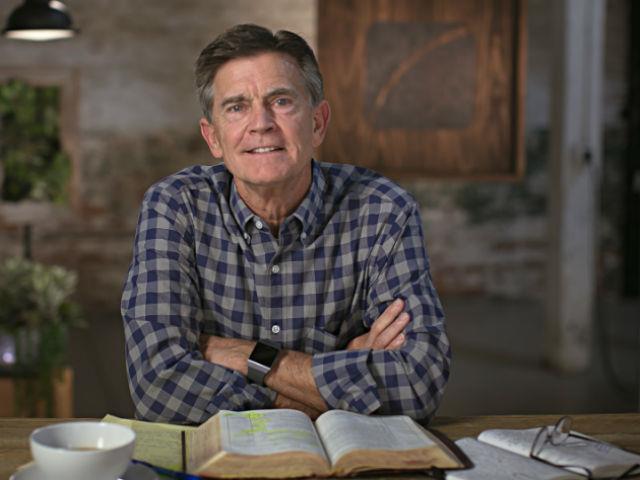
Once bitten, twice shy - as the saying goes. That’s never truer than when you’ve been attacked for your faith. Chip explains a simple method for rebuilding that confidence after you’ve taken a beating for your faith.
Resources
Connect
- 888-333-6003
- Website
- Chip Ingram App
- YouTube
Partner With Us
- Donate Online
- 888-333-6003
References
Chip Ingram: Do you feel confused, discouraged? Do you really wonder right now whether it's really worth walking with God? If you need some help, stay with us. It's on the way.
Dave Druey: I'm Dave Druey and this is Living on the Edge with Chip Ingram. Today Chip gives us two simple but powerful ways to help someone whose faith is genuinely faltering as we continue a series called Building Authentic Community. As believers, we all face challenges in our walk with God, and sometimes it can feel like our faith is under attack from the world around us. If there's someone in your life who needs perspective right now, or if that someone is you, today's lesson could be exactly what you need to hear. Chip is in 1 Thessalonians chapter 2 with today's message titled, How to Lift Up Those Who Are Down.
Chip Ingram: And so the question I want to ask and answer tonight is how do we encourage those people whose faith is being knocked down? That's what we want to ask and answer today, and God has a game plan. The game plan at first sounds really kind of weird. Do you know what the game plan is? Remember, remember, remember. And so in chapter 2, verses 1 to 12, 1 Thessalonians, guess what Paul does? He calls them to remember the most important things in their life in order to restore their perspective so that they grow through their faith being knocked down. How do you help, how do you encourage people whose faith is being attacked or slandered? Now, just by way of doing a little Bible study, by the way, this is what I do. I'll read a passage over and over and over, and any concept that is repeated then I'll circle it or underline it. Look at verse 1: you yourselves know. Verse 2: you know. Skip down to verse 5: as you know. Verse 10: you are witnesses. Verse 11: you know. Are you getting the idea that possibly the Apostle Paul, writing to these people whose faith is being undermined, that he wants them to remember something? Could this be a possibility? And so the Apostle Paul is going to teach the Thessalonians: remembering God's work in the past is the key to getting perspective for doing his will in the present. That's what he's going to teach them. And now what I'd like to do is I'd like to give you four key principles to help people who are faltering. Here's how to help them. First thing I think you need to do is help them remember the day. Just remember that phrase: remember the day. You've got a friend, you've got a son, you've got a daughter, you've got a mom, you've got a dad, you've got a brother, you've got a sister, whoever it is, help them remember the day they came to Christ. To reminisce, if you will. It will be a powerful experience and it'll give them perspective. The second principle here is not only remember the day, but Paul says remember the people. We need to remember the people that God used in our life because when our faith is a little shaky, bringing back to mind those people and remembering their character and remembering later their love will help us get perspective. Notice what Paul says in verse 3. He says, "For our exhortation or our appeal does not come from error," it means delusion, "or impurity," that has no sexual connotations, "or by way of deceit." Now, you say why would he say sexual connotations? In that day every Tom, Dick, and Harry was roaming around the Roman Empire and they were doing their little tricks. They were charlatans, just like today, and they did it to get a following, to get self-promotion, to get money. And then most of the ancient religions had some sort of sexual deal hooked in with them, and the leaders were highly involved in it. And so the Apostle Paul, defending himself, says, "When we came, it was no error, no impurity sexually, and no trickery or deceit." The word means literally a bait, like for a fish. He says, "But just as we have been approved by God," notice this phrase, "to be entrusted with the gospel, so we speak." We've been approved by God. God's approval is on our life and we have been entrusted. We are stewards of the gospel, so we speak, not as pleasing people, but God, who examines our hearts. The character of the servants of the gospel message, he says, we were straight shooters. Notice verse 5. He says, "For we never came with flattering speech," we would call it a con man. It's the idea of leading people along, getting them to follow you, building into their confidence until the point you take them down a different path and the whole goal of the different path is you fleece them, either emotionally, monetarily, or sexually. He says, "Not us. We never came with flattery, nor with pretext or a mask," no hypocrisy. "We didn't come for greed or money." He says God's our witness. Nor did we seek glory from men. This wasn't about self-promotion or making a name or trying to be a somebody either from you or others, even though, by the way, let's get this straight, as apostles we had every right to exercise some authority, but we didn't even do that. We gave away our apostolic rights in order to serve you. Here's his argument. They're being attacked and they're going through their sociology 101 experience of faltering in the faith. And the Apostle Paul says first of all, let's remember when you were saved. Remember that? Yeah. Second he says, let's remember the character of the messengers. Remember me, remember Timothy, remember Silas, remember how we lived. These attacks, these questions that are coming to your mind, they're unfounded. And so let me give you a couple ways underneath here to help people. First, help people remember the character of those who ministered to them. Help them think back of a person or two that they really admired, that were really straight shooters. They were people of integrity. Second, get them to compare the character and quality of those who ministered to them with the character and quality of those who are attacking them. That's critical. Did you get that? Get them to compare the character and the quality of those who've really genuinely helped them in their faith and compare that with the character and the quality of those who are attacking. Life lesson: ministry to others is a sacred stewardship. You might jot that down. Ministry to other people for us as believers is a sacred stewardship. Our motives must match our message. See, the fact of the matter is some of us are sharing our faith. Some people are coming to Christ. And right now when a person's picture comes to their mind about who's helped them spiritually, do you know whose picture it is? It's yours. Now, they're going to go through some rough times later and your picture pops up in their mind. Will they be able to say, "Oh, that woman, that man, that student, they were a straight shooter. They really lived out what they said"? Final point under this is the credibility of the message is intrinsically linked to the integrity of the messengers. How many have a close friend who is fallen away or slipped away from the Lord because they put a lot of stock in a person, whether it be a pastor, whether it be a business person, whether it be someone who helped them spiritually, and now that person has gone south spiritually and that person says to you, "Hey, I gave it up after that"? Do you know anybody like that? I do. Who are the ministers in this church? It's us, right? Leaders are equippers. Every member is a minister. You are a minister. So guess what? The integrity of the message, the credibility of the message of the gospel of Jesus Christ is intrinsically linked to the integrity of your life. Now, that's a moral weight, isn't it? Now, if you feel overwhelmed, good. You should. That's what ought to keep me and you on our knees saying, "Oh God, I deal with tough people. I deal with thousands or millions of dollars. I've got all kind of responsibility at my work. There's people here in ministry and they all really look to me and I can't measure up and I'm inadequate." Great! That's what the Apostle Paul said: who's adequate for these things? Nobody is. And so you stay dependent and you cry out to God one day at a time and you say God give me the supernatural power to significantly live out my life. And when I blow it, don't let me fake it. Let me go back to people and tell them where I blew it. Make it right and go on. People don't need perfect models, but they need real ones. And so we learn: help people remember the day. Help them remember the people that had impact, and third, help them remember the love. When people's faith is starting to falter, when they're getting knocked down, they're discouraged and they feel inadequate and they have some doubts, they need to remember the people that really, really have loved them because we forget that. Paul gives us two metaphors here, verses 7 through 11. Metaphor one is he said we loved you with a mother's love. Metaphor two, we loved you with a father's love. The first is tender and compassionate and sacrificial and giving away your life and going for broke. The second one is instructive, encouraging, even rebuking when necessary to keep you on the straight and narrow. Follow along. He says, "But we proved to be gentle among you, as a nursing mother tenderly cares for her own children." The word tenderly cares literally is to warm. The Apostle Paul says the picture that comes to your mind when you see a tiny little newborn baby against the breast of her mother and the warmth and the security that that baby feels, that's how we feel about you. That's how we loved you. Verse 8, he says why. "Having thus a fond affection for you." This wasn't a job. We weren't preachers. Having thus a fond affection, we loved you. We were well-pleased to impart to you not only the gospel, but what? But our own lives because you had become very dear to us.
Dave Druey: You're listening to Living on the Edge with Chip Ingram, and we'll pick the message back up in just a moment. Quick question: is Chip's teaching already on your phone? The Chip Ingram app puts his messages, video teachings, and daily encouragement right in your pocket. So you're never more than a tap away from something like what you're hearing right now. It's completely free and it only takes a minute to download wherever you get your apps. Okay, now let's get back to today's message.
Chip Ingram: The people that you know that are struggling need to remember there's people that have loved them deeply, sacrificially. There's people that have been over at their house late at night and prayed through the night and met them at the hospital and struggled with doubts. Verse 9, he goes on, "For you recall, brethren, our labor and our hardship, and how we worked night and day so as not to be a burden," the idea is financially, "to any of you. We proclaimed to you the gospel of God." "You are our witnesses, and so is God, of how devoutly," it means holy, "how uprightly," it means morally pure, "and how blamelessly," beyond reproach, "we behaved toward you believers, how just as you know we were exhorting, encouraging, and imploring each one of you," metaphor, "as a father does his own children." You study the three words. They're amazing. We were encouraging. We were your cheerleaders. We were the dad who said, "You can make it, son. You can make it, son. Hang in there. I love you. Oh, you fell down, you blew it. Just sin again, you went out and got drunk. God understands, we still love you. Come on, get up, let's go again. Oh, it's all right, I know it's tough and you've been in those pagan temples. Hey, get up and do it again. We love you, hang in there." And then we comforted and we cried, like a dad does at times. And then the final word, we implored, we urged. There's a sense of urgency. We stood up and said, "Hey, you're playing games with God. Step up to the plate and walk with God and say no to sin and do what you know is right." See, that's what a dad does. The Apostle Paul says that's what we did for you. He said you feel like your faith is on shaky ground? Remember the day that you're saved. Number two, remember the messengers. Remember the people that God used in your life. Third, remember the love. Remember the love that you've received. Why would God let go of you now? Why falter? Why doubt? Why question if God loved you that much in the past? Do you think he's going to let go of you? No way! Application. Help others as you meet with them this week, as you write letters, as you call people on the phone, as you line up lunch appointments, and I'm encouraging you to do that. Remind them of the time and the meals and the counseling and the financial help and the encouragement and the childcare and the friendship they've received from those that ministered Christ to them. That's mother's love. And remind them of the instruction and the truth and the Bible studies and the challenge and the spurring on and even the rebuke and the correction they received from those who ministered Christ to them. And that's father's love. Help people remember how they've been ministered to. And the little life lesson here: ministry is messy. Ministry is very messy. Ministry isn't about transmission of informational teaching. Ministry is about wholehearted involvement in the trenches of life where you go through it with people and you love them until they mature. And you go down with the downs and up with the ups and down with the downs and up with the ups. And there's times where you love, embrace, encourage, and comfort. And there's times you sit down and say, "If you really don't mean business with God, why don't you let me know? Because I don't want to play games and God doesn't want to play games. What you're doing is wrong." And the last three or four times we've met, you've asked for help and all you're doing is whining. If you want help, I want to give it. If not, at least get honest, okay? That's ministry. It's involvement. And the Apostle Paul says if you can help people remember that day they were saved, if you can help people remember the people that have been significant and remember how deeply they've been loved, you know what happens to their little problems, their faltering faith? They get small. I mean, we're talking about a God, if he's done this much in the past, he's surely going to help them make it through this. Final thing, he says remember the transformation in your life. He reminded the Thessalonians, "Hey, not only when I came, how you came to Christ. Not only the character against all the slander and attack you hear, man, we were above reproach. And not only did we stay up late and help you and love you and care for you like a mother." But he said, "You Thessalonians, why don't you just rewind the tape? Your life has changed. You've been transformed." Notice verse 12. He says this imploring, this encouraging, this exhorting like a father his own children, notice verse 12, "so that." When you see that in English, it can either mean purpose or it can mean result. In this case grammatically, it means result. It has the idea of so that, or resulting in, "you may walk in a manner worthy of God who calls you in his own kingdom and glory." He basically says so that we encouraged, we loved, we helped, so that you have the power and the ability along with the desire to live out a new life even as you already are. And he tells them look, think back. When we came into town, before you heard the gospel, now think of all that time. Now think of who you are here now. Look at the difference between your life here and there. Your relationships between here and there. Your joy level between here and there. The peace in your heart between here and there. And you know something? We need to remind people in our midst of how much God is changing them. You know who the last person is, this is another little life lesson, the person who's last to know how much Christ is changing their life is the person inside the body walking around. Because most of us, what do we do? Even though we're changing, all we see is the crud that still needs cleaned up. All we see is the problems that still need attention. And so we give our focus to that. We need to be little mirrors to one another. We need to verbalize to one another: man, you're making progress. Wow! Are you just starting to talk to your wife and kids like that? You used to be pretty insensitive. Wow! You know that issue you asked me to pray about three months ago with your husband? It is amazing the change I see. Man, your countenance is different. The discipline I see in your life, your concern for other people. Man, I hear you verbalizing your faith and living it out. It is amazing what I see in your life. But it happens so gradually, doesn't it? Okay, back to square one. People are hurting more than we know and more than they ever show. And you have more to offer than you know and more than you show. Find that person, if they be in your own home, if they're in your Bible study, if you're in ministry with them, if they're a mom, a dad, a brother, a sister, a aunt, uncle, a co-worker, I'm going to ask you to fan out and each one of us choose one person and say whether it's over lunch, a letter, a phone call, an email, I'm going to guide this person to remember the day that they were saved and relive it. Wouldn't that do a lot for them? I'm going to guide this person and I'm going to ask them, I'm not going to tell them, I'm just going to start asking them questions about the people that have had the most impact in their life. I'm going to do something over the phone or around the table where I get them to remember how deeply God has actually loved them through other people. And then I'm going to make some very honest, objective, not blowing smoke comments about the concrete supernatural Christlike character that I see in their life that didn't used to be there. People, I want to tell you something. If you bow your head tonight and ask God to bring a name to your mind, he will. And if you this week will take steps to help that person remember God's faithfulness in the past, then they will get perspective to do what? Do his will in the present. When our faith is slandered, remembering the work of God in our past is what provides perspective to do the will of God in the present. That's what the Apostle Paul did for the Thessalonians, and that's what he wants to do for us and what he wants us to do for others.
Dave Druey: You're listening to Living on the Edge with Chip Ingram and a message titled, How to Lift Up Those Who Are Down, Part 2, part of our series Building Authentic Community. If you missed any part of today's teaching, you can catch up anytime at livingontheedge.org. And while you're there, don't forget you can also find the full unedited version of today's message on the Chip Ingram sermon podcast, presenting each of Chip's sermons from beginning to end, available wherever you listen to podcasts. Today Chip painted a picture of love that looks like a mother's tenderness and a father's persistence, love that showed up for us long before we ever earned it. Love like that doesn't happen by accident. It's chosen. Chip's book, I Choose Love, hands you the roadmap for becoming that kind of person. It reframes love as a decision instead of a mood and gives you a clear practical way to start living it out in your everyday relationships with the spouse, a child, a close friend, or anyone else God's placed in your path. Get your copy of I Choose Love at a special price today at livingontheedge.org/offers. And speaking of powerful choices, for 30 years this ministry has existed because listeners decided again and again that this kind of teaching was worth funding. Today we invite you to make that same decision. A gift of any size helps deliver these Bible teachings to homes and cars all across the country. Give today by going online to livingontheedge.org or call us at 888-333-6003. That's 888-333-6003. Your support makes more difference than you can imagine. Thanks for listening and join us next time.
Related Episodes
How to Rescue Those in Spiritual Danger, Part 2
Thursday, October 8
How to Rescue Those in Spiritual Danger, Part 1
Wednesday, October 7
How to Lift Up Those Who Are Down, Part 1
Monday, October 5
About Living on the Edge
Living on the Edge, a discipleship ministry and radio/television program of pastor and author Chip Ingram, is committed to providing everyday believers with tools that help them live like Christians. Each week, Chip will take you through God's Word for insight on topics like strengthening your marriage, understanding love and sex, raising children, and overcoming painful emotions. Today, a daily listening audience of more than one million people can hear Living on the Edge on over 1,100 radio and TV outlets across the United States and internationally.About Chip Ingram
Chip Ingram's passion is to help Christians really live like Christians. As a pastor, author, coach and teacher for more than twenty-five years, Chip has helped people around the world break out of spiritual ruts and live out God's purpose for their lives.
Chip is the author of eleven books and reaches more than one million people each week through online, radio and television outlets worldwide. Chip serves as CEO and Teaching Pastor of Living on the Edge, an international teaching and discipleship ministry. Chip and his wife, Theresa, have four children and twelve grandchildren.
Contact Living on the Edge with Chip Ingram
Mailing Address
Living on the Edge
PO Box 3007
Suwanee, GA 30024
Phone Number
(888) 333-6003


