Why Better Things Don't Always Make Things Better, Part 1
Ministries > Living on the Edge with Chip Ingram
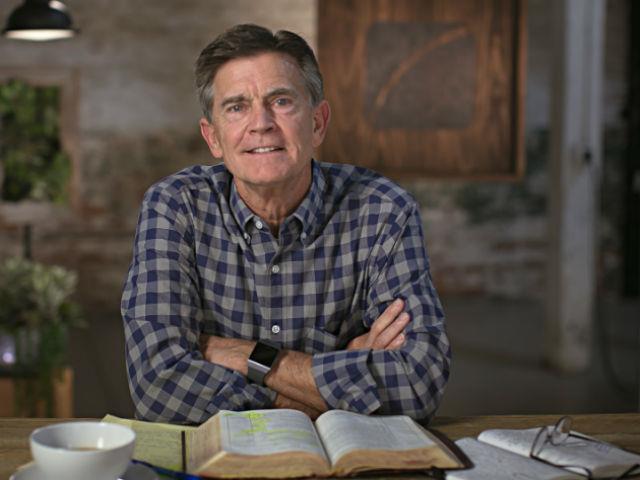
Join Chip as he discusses why better things in life don’t always make life better.
Resources
Connect
- 888-333-6003
- Website
- Chip Ingram App
- YouTube
Partner With Us
- Donate Online
- 888-333-6003
References
Dave Ingram: Today on Living on the Edge with Chip Ingram.
Chip Ingram: Sometimes the very thing we dream about, that we want, that we're so passionate about. Oh Lord, if I just got married. Oh God, just give me that job. Oh God, just And sometimes you mortgage all that really matters to get it, and you find yourself empty. If that's you, you want to stick around. Because we're going to talk about why better things don't always make things better.
Dave Ingram: Welcome to Living on the Edge with Chip Ingram. Would more money make you happier? It's a simple question, but Chip says the way we live often reveals a very different answer than the one we'd give out loud. Today as we continue our series Building Authentic Community, Chip turns to James chapter 5 and some of the strongest words about wealth anywhere in scripture. Through an unforgettable story from a cardboard city in Manila, he will show us why God isn't opposed to wealth, but he is opposed to what it can do to us. Here's Chip with today's message Why better things don't always make things better.
Chip Ingram: I'd like to start a little bit unusual. I'm going to ask you a question. I want you to answer this question with the very first, most immediate response that comes to your mind. I don't want you to answer it with what you ought to, what you should say, what a Christian is supposed to say, what some really holy person would want you to say. I'm just going to read one question and just the most immediate reaction that comes to your mind, honestly, true or false. I want you to say it in your mind. You don't have to blurt it out. Here's the question. Are you ready? If I had more money, I would be more happy. True or false? Okay, false. Then why is it that everyone wants more money? The lie is this. My significance, write that word in, and value, write that word in, is measured by the quality and the quantity of the things that I possess. And today we'll learn that those very subtle, philosophical values and mindsets are at the core of destroying some of the most important relationships in your life. It's a very, very interesting passage. And so let's open up the text together. Notice what it says in verse 1 of James chapter 5. It opens up and says, now listen, you rich people, and this is strong, weep and wail because of the misery that is coming on you. Verse 1 written to unbelievers abusing God's children, judgment's coming for what you've done. He goes on to say, your wealth has rotted and moths have eaten your clothes. Verse 3, your gold and silver are corroded. Their corrosion will testify against you and eat your flesh like fire. You have hoarded wealth in the last days. Look, the wages you failed to pay the the workmen who mowed your fields are crying out against you. The cries of the harvesters have reached the ears of the Lord Almighty. You have lived on earth in luxury and self-indulgence. You have fattened yourselves in the day of slaughter. You have condemned and murdered innocent men, those who were not even opposing you. And so the intended audience is some rich unbelievers, but out of it I think are some principles for all of us. Scathing rebuke followed by the four reasons for the rebuke. Now here's what I want you to get before we jump into this very strong passage. The truth is God is not opposed to wealth, but God is opposed to the misuse and the abuse of wealth. So that's the warning. He says the misuse of wealth that hurts and abuses other people will bring the judgment of God. And then he's going to give the reason. There's four warnings that he gives out of verses 2 through 6. The first one has to do with how much you've accumulated. He's going to talk in in verse 2 and he's going to say, here's the warning, don't hoard it. Warning number 2, don't steal it. Don't steal it. He goes on, warning number 3. This is about how we spend the money that we have. And here he says, don't waste it. Don't waste it. Listen to the scripture. You have lived on earth in luxury and self-indulgence. You have fattened yourselves in the day of slaughter. Pretty strong stuff, isn't it? What's the application for us as believers? For me, the application is just because you can afford it doesn't mean you should buy it. Just because you can afford it does not mean you should buy it. We we're we're deluded in thinking it's our money. It's God's money. 100% of all that you have, all that I have, it's God's. You say, why I work for it? Okay, who who gave you the talent? Who gave you the job? Who gave you the oxygen? He's the Lord of all the earth. Silver and gold is mine, Deuteronomy 8. He everything belongs to him. And so what he's saying to these people is don't waste it. Don't waste it. Don't hoard it. Don't steal it. Don't waste it. And then finally, warning here is don't abuse it. He talks about how do you use your money to influence other people. He says, don't use your money to to abuse the influence that it can have. Notice he says in verse 4, you have condemned and murdered innocent men who were not opposing you. The owners didn't pay their wages. Well, guess what happens? Not only can the guy goes home and cries out to God and says, God, I worked all day. I didn't get any money. I can't feed my family. Well, he has other He's got bills to pay, right? He's got a landlord to pay. So the landlord comes to the guy and says, hey, where's that money? He goes, well, the guy didn't pay me. He said, you that's a personal problem. And you know how they got people to pay their debts back on that day? They put them in prison. Which is really smart. I mean, he's really I mean, making a lot of money in prison to pay off that debt, but that 's how it worked. Remember the parable of Jesus and, you know, the man who came and wouldn't pay the debt and said, put that man in prison. He begged, begged, begged for mercy and then he did the same thing with someone else. That was how it worked in the day. So literally, what he's saying here is that you've abused it. You've condemned and murdered men. If you end up in prison in order to pay your debt and you can never pay your debt, what do you end up doing? You die. You die. And this is the harsh word from the spirit of God who sees this injustice to these unbelievers who are hoarding and stealing and abusing these people. And he says, they weren't even opposing you. Literally, that phrase is they were powerless before you. They they they they they weren't even in the game. They they couldn't do anything against you. And now you see people who use money for bribes, to pay off judges, political appointments, to get contracts. So that's how you abuse money. Anytime you use money to prefer justice and control others instead of love and serve others that will bring glory to God, it's an abuse. I remember being in the Philippines with one of my buddies and a little guy named Alex, and he was on the front of the motorcycle and I was on the back of the motorcycle and I was scared to death and I should be in Manila as we were weaving in and out of cars and They're like cardboard cities. I mean, they're they're just the poorest of the poor and they're like cardboard shacks and little corrugated aluminum and and and they call them squatters because there's no land and they're like refugees and they form these little cities. And then every now and then someone very powerful will decide, you know, I want to use that land for a project of mine. And so he makes a call to the government and the government says, oh, sounds good and if you've traveled anywhere around the world, bribes are a part of how life works in almost every country in the world. And my friend Alex, just a neat guy, godly guy that had a ministry among all these refugees and and I mean hundreds, thousands and thousands of people. And Alex was the only one. There was a little pole and they ran a wire and he had one light bulb that hung down in the middle of his cardboard shack. And all the people from all around would come at night because he had a light bulb and he would read the Bible and he shared Christ with them. And then I still remember his entire house was just about the size of this stage right here. And there was one about from here to here was one bed. And and he wasn't apologizing. He was like showing me, Chip, come and see. This is so beauty. You know, I'm such a rich man. I'm such a rich man. And he would he would sleep this direction and his wife would sleep that direction. So they would be on this one. It was a dirt floor and there was another bed about, you know, 4 ft and he had a small boy about 5 years old and his wife was ready with number 2. And he was so excited to show me his castle with a light bulb. And then I remember hearing some guy wanted to use that land. No warning, no telling people anything. Just a line of bulldozers came in. Thousands of people displaced. That is what James is talking about. That abuse.
Dave Ingram: You're listening to Living on the Edge with Chip Ingram and we'll get back to today's message in just a moment. Did you know Chip isn't just on the radio? He's on YouTube, too. Just search Living on the Edge with Chip Ingram and hit subscribe. You'll find full length video teaching from Chip on marriage, parenting, leadership, and a whole lot more. Ready to watch whenever it fits your schedule. It's also a great way to share a message with a friend who needs it. All right now, back to our message.
Chip Ingram: This is a very depressing passage. And this passage that we've read is happening all around the world, especially in third world countries. And it's happening probably more here than we like to believe. Because as Christians, for that lie of security and significance, we hoard. We must hoard some because our garages are full of all this stuff that we got about every 6 or 8 months trying to get other people to take our junk, which is their treasure. And you know what? I I I think as Christians, you know, we we steal it. I mean, every every employee here paying people what they're worth, everyone making sure they got the kind of benefits they need, what they're worth. Everybody here who works and has an employer, you put in a full day even if the supervisor is gone. Or do you come in a little late or leave a half hour early? You know what that's called? It's called stealing. The hoarding, the abuse, the stealing, the wasting. How much unconsciously has the buffet mentality kind of gotten into our bloodstream and that when we have a little extra, we just, you know, do this and do that because every moment of every day, what are you getting? Advertisement, advertisement, advertisement, advertisement, advertisement, advertisement. You know what? You like You know, you got to watch like you got three of them, but you need a new one. You got a blouse. You got like four of them, but you need it in a lighter shade of this or that. You know, you got like four pair of shoes that go with everything, but you get get one for this outfit, this outfit, this outfit, this outfit, this outfit. I mean, like how many feet do we have? But what happens is it becomes normal, doesn't it? It just becomes normal. And I think there's warnings here for us as believers. Now this could end on a very negative note, but it's not going to because remember I said we're going to have a good time together. What I want to do is I want to flip this around and ask and answer the question, if that's the wrong way to use money that brings God's judgment, what's the right way? What what what would be the four positive ways that we could leverage this amazing wealth? One of the things that upsets me about Christians is they feel really guilty. We're all very wealthy. Now what we do is we find someone more wealthy and we think we're middle class. I mean, I've I've met with people in living rooms who are only worth 10 or 12 million dollars and just feel like, I don't have much. I mean, now real wealth is And they'll talk about someone with about 100 million. I've been in rooms with people that have 100 or 200 million dollars and look at me like, and no, wealthy? No, no. I mean, when you have a big capital B in your portfolio like in billions, now that's wealthy. And you know, it's just a game that we play. And so we think, well, people making like over 200,000 now they're wealthy. And I got news for you. You are wealthy. I am wealthy. And you know what? That's not bad. It's just a stewardship. It's just God has made us wealthy. Then what we ought to ask is, Lord, how do you want us to use this wealth in a very positive and good way? And so what I want to do is I want to flip this around and let me give you four commands right out of scripture on the right uses of wealth. And I want to take the model because he's gone negative, negative, negative, negative. I want to go positive, positive, positive, positive. So when we walk out of here, instead of feeling lonely and bad and guilty about our wealth, we can say, hey, here's a practical, systematic way that we can use the God-given wealth for good. So with that, are you ready to roll? Good. Command number one is save it faithfully. Although hoarding is condemned, God does say that wisdom demands that we plan for the future with our excess wealth. Notice what it says in Proverbs 21:20, the wise man saves for the future, but the foolish man spends whatever he gets. Biblical savings is about stewardship, not about security. Do you see the difference? As a as a believer, I need to save for emergencies, for crises, for future needs, to help others, to make better use of my money. And when I save, I make better decisions. There is a reason why those commercials say, you can buy this today and no payments for 18 months. It's because you start buying stuff and having stuff you can't really afford, but you know, it doesn't hit you for 18 months. And usually there's a little thing in the fine print where you're going to end up figuring They'll pay You'll pay the interest on that some way, somehow. You know, they're going to get you this way, this way, or that way. But you know what? When you save, it's an a novel thing. What if you made car payments to yourself so the next car you bought, you walked in and said, how much does it cost? Here it is, and you paid no interest. What if you save so that when your washing machine breaks down, you walk in and say, I need a new washing machine and you pay him cash. And by the way, when you pay cash and when you save and you have you know, that taken care of, what if there's a big need or what if there would be imagine like a hurricane would hit and millions of people be displaced. What if you had money on the side that you could just reach into and say, you know something? This is for an emergency. I thought it was for my emergency. Lord, I think you must want it for their emergency. And you could give it not with, oh, I wish I could do something. See, God says it's important and wise. You know, Proverbs says observe the ant, right? What does he do? You know, they work together. And and they they do things at different times of the year so that when the winner comes, they have prepared. So I think it's very important to save. Um savings as a steward requires a couple of things. Now this sounds elementary, but I I've been some really, really bright people that don't quite get this. In order to save, follow very carefully. You have to spend less each month than you make. You You want I'll go over that again slowly, okay? Get to get that get that pen out, okay? In order to save money, you have to spend less than you make. So if you make, you know, $2,000 a month or $5,000 a month or $10,000 a month, you have to live on less than that so you can take a portion of it and save it. And and I'm I'm not being as facetious as you think I am because one of the things I did to get through seminary is I I I I did some selling of investments and some financial planning. And what I found is if the people made 50,000 a year, that was the window, they spend about 55 grand. If they made 100 grand a year, they spend about 110 grand a year. If they made $250,000 a year, they spend about 300 grand a year. And it was amazing, whatever window that people make, their expenses seem to always exceed what they make. It's an amazing thing but you would have to begin to save. It will be just a freeing, freeing thing to have money set aside for emergency or future purposes purchases or something someone else needs. The second positive way to use your wealth is make it honestly. This is how we're supposed to gain wealth. Notice what it says. Work brings profit. Talk brings poverty. We're to work hard instead of steal it. Notice work hard instead of the get rich quick schemes. Proverbs 13:11. It's not in your notes, but you might want to jot that down. It says wealth from gambling or the idea of getting rich quickly disappears, but wealth from hard work grows. For the classic New Testament passages is Ephesians 4:28, let him who steals Literally, it's happening in the church. The grammar here is literally stop stealing. Let him who steals steal no longer, but rather what? Let him labor performing with his own hands what is good in order that he may have something to share with him who has need. Work hard but wisely. I love Proverbs 23:4. It says don't wear yourself out to get rich. Have the wisdom to show restraint. Work hard. That's how you gain it. You know, I I know when you can't sleep and there's times I can't sleep. It's 1:42 in the morning. And you've even read the Bible a little bit, still can't sleep. It's now 3:33 in the morning. You're now thinking what a terrible day it's going to be and maybe I could watch some mindless thing on TV. It'll help me sleep. And so you turn on the TV. The quality program between about 2:30 in the morning to 5 will blow your mind. And what is it? With no money down, I'll show you how to buy real estate like you've never dreamed, right? Or for $19.99 seven payments of $19.99, this book has the magic formula where you can be a millionaire. And then they have these guys with all these testimonies. And I love the guy the one guy, you know, he's in the boat with all the babes in the bikinis in back going, hey man, I'll tell you what I did. I went through this course and What what is it? It's a lie. It's just a lie. There are no quick fixes. God says there's nothing wrong with wealth. In fact, God says he gives wealth to the godly and he adds no sorrow to it. He says, try this. Just work for it. Quit quit quit trying to get I I don't know how many believers, even Christian organizations about 10 12 years ago, a Ponzi scheme soaked tens of millions of dollars promising, if it sounds too good to be true, just take it. It's too good to be true. People who promise 20% return and this return and that return, something smells. Don't go there. There is no free lunch. Work hard. Save it. Make it honestly. And before I get to the next one, I I want to ask you a question because this is always lingering in the back of people's minds. People ask me, so how much money can a godly person make? I have an answer. Now this is Chip Ingram. We were in James before. You're going to get Chip Ingram so you can say, I like this. I don't like this. I'll weigh it. My answer, as much as you want. Of course, there's an end to it, you know. You ready? That's not the whole answer. As much as you want, as long it doesn't hurt your health, your family, others. And then here's the key test. As long as your spiritual growth is outpacing your financial growth. That's the test. Because money will always reveal your heart. You can make as much money as you want as long as your spiritual growth is outpacing your financial growth.
Dave Ingram: You're listening to Living on the Edge with the message titled Why better things don't always make things better. Part of our series Building Authentic Community. You can revisit this teaching or catch up on the rest of the series anytime at livingontheedge.org. Chip reminded us today that our worth was never meant to be measured by what we own. The things that make life truly rich can't be bought. They're given and they're chosen. That's the heart of Chip s book I choose love. It shows that agape love, the very love God has for us, is a decision to give, serve, and put somebody else s best interest ahead of our own. And when love like that takes root, it changes how we see everything including our stuff. Get your copy of I choose love at a special price today at livingontheedge.org/offers. You know, we hear from listeners all the time who've been willing to take an honest look at their own hearts. One listener, Matthew, recently told us that going through one of Chip studies revealed something he didn't expect. I learned that I was more materialistic and self-involved than I thought I was. I was having recurring temptations to seek security in stuff, situations, circumstances. Well, that honest look, he said, brought him back to first things and to what God wanted to do in him. That kind of change is exactly why this ministry exists. And it happens because listeners like you give. Become a monthly partner or make a generous gift today by going online to livingontheedge.org or calling us at 888-333-6003. You can also send your gift by mail to Living on the Edge, PO Box 3007, Suwanee, Georgia 30024. Now Chip, before we go, share a little more with us about why money is so dangerous.
Chip Ingram: Be glad to, Dave. Money in and of itself obviously is not bad or wrong. God isn't opposed to us having it, but he's opposed to what it can do to us. He's opposed to us getting it by stealing or manipulating, defrauding people. He's opposed to us hoarding it or finding our security in it. But what I will say, and I think this is really underestimated, especially those of us that live in the first world. I think we say things like money is neutral and it's not. Money is dangerous. Money is powerful. It's it's the other God. We need to understand that yes, we have to deal with money. We need to have it, spend it, save it, invest it, give it. But Jesus said that there's two gods, him and mammon. And it's very interesting. They don't even translate it money. They really gave it a name. And the idea is it's so dangerous that that's why there's all the warnings about money. In our next broadcast, I'm really going to talk about a specific game plan about how to take this dangerous commodity and use it wisely, invest it wisely, give it wisely, earn it honestly. Money is a powerful, powerful thing. And we need to get a good, clear biblical perspective of it and then put that into practice. Next broadcast, you don't want to miss.
Dave Ingram: I'm Dave Ingram and we'll see you next time right here on Living on the Edge. Today's program is produced and sponsored by Living on the Edge.
Related Episodes
Why Better Things Don't Always Make Things Better, Part 2
Wednesday, October 28
How Our Jobs Can Destroy Our Relationships, Part 2
Monday, October 26
How Our Jobs Can Destroy Our Relationships, Part 1
Friday, October 23
About Living on the Edge
Living on the Edge, a discipleship ministry and radio/television program of pastor and author Chip Ingram, is committed to providing everyday believers with tools that help them live like Christians. Each week, Chip will take you through God's Word for insight on topics like strengthening your marriage, understanding love and sex, raising children, and overcoming painful emotions. Today, a daily listening audience of more than one million people can hear Living on the Edge on over 1,100 radio and TV outlets across the United States and internationally.About Chip Ingram
Chip Ingram's passion is to help Christians really live like Christians. As a pastor, author, coach and teacher for more than twenty-five years, Chip has helped people around the world break out of spiritual ruts and live out God's purpose for their lives.
Chip is the author of eleven books and reaches more than one million people each week through online, radio and television outlets worldwide. Chip serves as CEO and Teaching Pastor of Living on the Edge, an international teaching and discipleship ministry. Chip and his wife, Theresa, have four children and twelve grandchildren.
Contact Living on the Edge with Chip Ingram
Mailing Address
Living on the Edge
PO Box 3007
Suwanee, GA 30024
Phone Number
(888) 333-6003


