The Sermon On The Amount – Part 2 of 2
Ministries > Running To Win with Dr. Erwin W. Lutzer
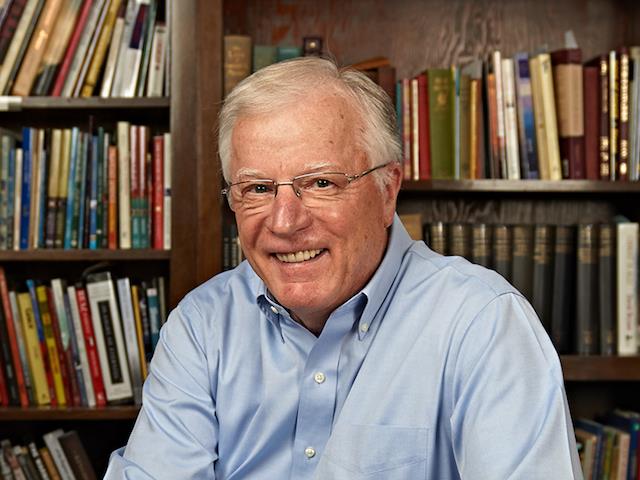
It takes faith to sow what we put in the soil. What harvest can we expect when we give generously to God? In this message from 2 Corinthians 9, Pastor Lutzer shows three harvests that money can never buy. Let’s trust the God of the harvest to provide for all of our needs.
Narrator: Let us run with endurance, the race that is set before us. Looking to Jesus, the founder and perfecter of our faith. Some people hold on to their money until their knuckles turn white. Learning to give breaks that stranglehold in a hurry. Sowing and reaping is the Bible pattern for determining how much to give. We're to sow generously and cheerfully. Today we learn about sowing expectantly from The Moody Church in Chicago. This is Running to Win with Dr. Erwin Lutzer, whose clear teaching helps us make it across the finish line. Now, with more in a series on managing God's gifts, here is Pastor Lutzer to talk with us again about The Sermon on the Amount.
Dr. Erwin W. Lutzer: Pastor, is there a direct connection between what we give and how much God gives us in return? Dave, God does not promise us that if we give him $1,000, he'll give us $1,000 back. But if you read the passage, what you discover is he does bless people, and often times spiritually and in other ways. And as you already emphasized in your intro, what giving does is, it takes away our greed. It's a wonderful antidote to greed. I'm holding in my hands a letter from someone who has been blessed as a result of this ministry, and they illustrate the principle we're talking about. This person says, "Jesus has become so precious to me because of your ministry," and then it says, "that's why I am a ministry contributor." Well, this is the second to last day when we're making available for you a very special offer, and that is that your gift will be doubled. I want you to think about that, pray about it, because we have those who are committed to help us double every gift given during this month. And then as a thank you, we're going to be sending you a copy of my book, Christ Among Other Gods, to help you defend the Christian faith amid many options. But for now let us listen, and at the end of this message, I'm going to be giving you some very important contact info.
Dr. Erwin W. Lutzer: Well, there's a third principle, and that is we should sow expectantly. Now, the question is, what kind of a harvest are you going to have? What is God going to give you in return? In the Old Testament it was primarily wealth. There was a tight connection between the spiritual life of the nation and the way in which God blessed them on their crops. He said, "If you follow me and serve me," he said, "I will bless you and uh your uh barns are going to be filled with plenty, and you're going to have all that you can possibly have. But if you turn away from me as a nation," the Lord says, "I will send grasshoppers, I will send hail, I will send drought." That's not true today, you know. Because God is no longer dealing with us as a nation, he's dealing with us as individuals, and he is creating a transnational community, a community of Jews and Gentiles, a community with different races and cultural backgrounds. And that's why we have here at The Moody Church our desire to be known as a culturally diverse community, not theologically converse, but culturally diverse, because we know that God is choosing people from every tribe and people and nation. So he no longer deals with us in that tight relationship. This is possibly the best place for me to comment on the so-called TV preachers. I actually thought that they no longer existed, the kind that we sometimes refer to. And I was surprised to discover that there are some people on television who are saying things that are so wrong, that are so demeaning to God, that are so manipulative. I hope that you are aware of them. I hope that you warn others about them. You know that if you give, God is going to give back to you. If you send to this ministry, this is the seed faith and soon you're going to be driving that pink Cadillac. I heard the other day, I couldn't believe this, somebody who should know better, they were praying to break the curse of debt. They were asking God to break the curse of debt. And especially if you sent money to the ministry, why indeed the curse of debt will be lifted right away. And not only that, I heard one preacher say, "This is unbelievable, folks." I I don't understand how there are Christians who listen to this kind of demeaning theological talk. He said that in effect, "if you send money to my ministry, you'll discover that God will pay your bills, and you'll you'll receive a computer printout from your mortgage company saying, 'We don't know how it happened, but our books show that your house has been paid for.'" Utter nonsense. If you are in debt, I'll tell you how to break the curse of debt. First of all, you take care of those credit cards in the plastic surgery that I talked about a couple of weeks ago. That's one good step. The second step is begin to pay your debts, get to a financial advisor who can help you to know how those debts should be paid over a period of time, and that's the way you get out of debt. You don't send money to some TV preacher so that he can pray for you to break its curse. It is a curse, but you got into it, and you and God and your financial advisor had better get you out of it. That's the answer. So we're not here crassly talking about that if you sow money, I promise you tenfold. I promise you that for every dollar you give, you're going to get another 10 in return. Listen to me, I've got something better to share with you than that from this text. Let me tell you something. I marvel at what the Apostle Paul says here. In fact, I not only marvel at it, I almost don't understand it. Because Paul is saying that if you sow money, God is going to give you a harvest, but the harvest is going to be something that is better than money and something that money can't even buy. Now there will almost always be financial return. But it doesn't mean as if to say that's why we give or that we are giving our way to prosperity, as the title of one book reads. Paul says, God's got something in store for you that money can't buy. So, what is the third principle? We've learned that we sow generously, we sow cheerfully, we sow expectantly. Expectantly, because we know it takes faith to sow. Because you're kissing the seed goodbye. You're putting the seed in the soil, and that takes faith. But notice the harvest that God gives us. What is it? Well, I've categorized it under three different ways to describe it. First of all, he says, the harvest of sufficiency in all things. Verse 8, I am astounded at the universals in the verse. In fact, I think that little word "all" or its equivalent appears about three times for sure and maybe four. Listen to what he says, "And God is able to make all grace abound to you, so that in all things, at all times, having all that you need." Isn't that four times? Notice then, "you will abound in every good work." I read that and I am astounded. I'm saying, "Paul, are you telling me that if I'm faithful in giving money, I am going to experience a sufficiency of God that money cannot buy? That I will find that well of water within me reaching up to eternal life?" Because the idea here in the Greek is that it will be a matter of inner resources, so that I will be able to suffer better, so that I will be able to face life better, so that I will have more wisdom and abound in all things. That's what Paul says is one of the harvests of those who give generously. It is a harvest of sufficiency. It is also a harvest, and this even surprises me more, a harvest of special righteousness. Verse 10, "Now he who supplies seed to the sower and bread for food will also supply and increase your store of seed." Now there he is talking about money. He's saying, "You put seed in the ground, you can expect that God is going to bless you to have seed back." But notice what you're going to have. "He will increase your store of seed and enlarge the harvest of your righteousness." I say, "Paul, I I don't get that. What's the connection between faithfulness in giving and the harvest of righteousness?" Now obviously this is not the righteousness which Jesus Christ gives by which we enter into heaven. Because that has to be a free gift because it is the righteousness of God to which we can contribute nothing. And this would be a good place for me to say that those of you are listening who have never received Christ as Savior, you've never transferred your trust to him, that you must do so realizing that you make no contribution to the righteousness of God. It must be received as a free gift. But Paul is talking about practical righteousness. I think if we could discuss this with Paul, I'd love to sit down and say, "Paul, help me understand better what you have in mind." Paul would say, "Look, if you are not giving generously, if you're not sowing generously, then don't expect necessarily that your family is blessed." "Don't necessarily expect that you are going to find that sufficiency and the practical righteousness and the wisdom that you need is going to take place because these are part of the harvest of those who sow the seeds." And you'll notice he quotes here from Psalm 112 verse 9, "He has scattered abroad his gifts to the poor, his righteousness endures forever." And somehow there is a connection between the two. What is the harvest? It is the harvest of sufficiency. It is also the harvest of special righteousness, and then special blessings. And here Paul begins to just what shall we say, have one phrase after another. And what the essence of it is, is he's saying that this is going to redound to the praise and the honor of God. You'll notice it says in verse 11, "You will be made rich in every way, so that you can be generous on every occasion." And again, he is still talking here about material prosperity. It is involved. It will result in thanksgiving to God. Who is going to thank God? It's the people who have been blessed as a result of the gift. It's the saints who are in Jerusalem. It's the children that we hope to reach here in the city of Chicago as we build this building. It's the people who come in who know that we need the classrooms for our adult ministries, our children's ministries, that we need space for a fellowship hall, so that our ministries can be strengthened and the interaction of believers can be can be made firm. You see, it is then that people are going to offer praise to God. I look forward to the day someday, in my mind's eye, I can imagine the dedication of the building that we hope to build. And I can imagine that we will begin by singing the Doxology or at least end by singing it. It will result in praise to God because we will say it isn't the building, but it's the thousands of lives that are going to be touched as a result of it. Thanksgiving and praise to God in that building and for that building will go on years to come, long after you and I have passed off the scene. So Paul is saying, you'll notice in verse 12, "This service that you perform is not only supplying the needs of God's people." Oh, that's part of it, yes. But it is also overflowing in many expressions of thanks to God. He's saying, "Those saints in Jerusalem are going to bless you for what you're doing, and you're going to be bound together in them, with them, because of the service by which you have proved yourselves, men will praise God." Now I underlined this in my Bible, but that's at least the third time Paul says that one of the results of this harvest is thanksgiving to God. For the obedience that accompanies your confession of the gospel of Christ, and for your generosity in sharing with them and with everyone else. And in their prayers for you, their hearts will go out to you because of the surpassing grace God has given you. No wonder he ends by saying, "Thanks to God for his unspeakable gift." Again, Paul wants to root our faithfulness in giving in the unspeakable gift of God, and he holds Christ high. You see what Paul is saying? Through our giving we are bound to other saints. Our hearts are knit together. Lives are challenged, people are blessed. And because in Stewardship Enrichment, 10% of our giving is going to go to missionaries in different parts of the world, in different projects, there are people all over the world who are going to offer praise to God because of the generosity of God's people. And that is part of the harvest of righteousness. It's the kind of thing that money cannot buy. Now, of course, the question is, how much shall we give? Somebody says, "Shall I tithe on the gross or shall I tithe on the net?" How shall we do this? How shall we discern God's mind? Have you understood the principles? Sow generously. Ask yourself the question, "What kind of a harvest do I want? Do I want God to bless the gross or do I want God to bless the net? What kind of a harvest do I want?" Shall I sow sparingly or shall I sow bountifully, believing in the harvest? There's a second principle, and that is what kind of a heart do I have? Because we're to sow cheerfully. Could it be that there's somebody here today who says, "They aren't going to get a dime out of me." Well, my dear friend, if you're sitting here today and you're saying that, then I humbly say, keep your dime. Keep your dime. Get on your knees until you love God, and then you'll be able to share that dime and maybe even a few others. But until your heart is right, don't worry about your checkbook. But your checkbook may be a well, good indicator as to where your heart is. So, what's the second principle? You sow cheerfully. We ask the question of, what kind of a heart do I have? And now we also sow expectantly, and we ask ourselves the question what kind of a heritage are we going to leave? What kind of lives are we going to impact for the cause of the gospel? No, there is no percentage stipulated. And we're not here to tell you what the percentage would be. Certainly, 10% is a good benchmark, it's a good beginning place. But beyond that, it is between you and God, seeking his mind and asking the question about the harvest. In a third-world country, there was a father who faced a very difficult decision. He had a bucket of grain, of corn, actually, that his family needed. Because they were poor, and here was this tension within him as to what to do with a bucket of corn. You could use it now and it would probably serve them maybe for a week. But what he did is he went into the little hut, took it down, and put it in the ground. He seeded it. As he walked along, he he stomped it into the ground. And his little daughter was astounded. Because to her, Daddy was just ruining the whole thing. I mean, what good are these seeds in the ground? I mean, we need bread. We need whatever corn can make. But he said to her, "My little girl, I want you to know that I'm putting this seed away in the ground because I believe in the harvest." You see, some of you face that decision, don't you? Because you need money to live. No question about it. You have mortgage payments. We all do that. We all have to be able to survive. And so there's tension here, you see, between what shall I do? What shall I give? And how much can I quote afford to give? In a sense that is a legitimate question. How much seeding can I do when there is not a whole lot of corn in the house? And the answer to that question is that it depends on your faith in the harvest. The Apostle Paul says, "You give generously, God is able to make all grace abound to you, so that in all things, at all times, having all that you need." What a promise! "You will abound in every good work." You give generously, and you get things that money can never possibly buy. Can you trust the God of the harvest? That's the question. Can we trust God to keep his word that the harvest will come in? You know, of course, that you always reap in a different season than you sow. You sow in the springtime, but you don't harvest in the springtime. You have to wait. In the very same way, we sow now, and the harvest will begin to come in. Of course, we will see it with our own eyes, God willing, but but it's down the road. It's it's years from now that we see its fruition and its completeness. And so I ask you today, what is the amount? Sow generously, sow cheerfully, sow expectantly, and believe, believe in the God of the harvest. Let's pray. Now Father, we ask that you shall take these words and bless them. We ask today, Father, that you might help us to trust you in those areas that are so difficult for us to trust. And we pray that the grace of Christ and the strength of Christ would be upon us. Those who have not yet made their decision and their commitment. Oh Father, help them to seek you, to believe you. And to be generous. We pray in Jesus' name. Amen.
Dr. Erwin W. Lutzer: You know, this is Pastor Lutzer, and I want to expand that a little bit and say this, that often times we will not see how our gifts were used or the fulfillment of them until we get to heaven. We know, of course, that we have contributed to organizations, all of us have, that spread the Gospel of Jesus Christ around the world. And not until eternity comes, will we understand its full impact. And I deeply believe that that is true of the ministry of Running to Win. This is the second to last day we're making a very special offer to you, for a gift of any amount, we're sending you a copy of my book, Christ Among Other Gods, but more than that, your gift will be doubled. Imagine that, contributing to this ministry, you will not see the results until eternity begins. I hope that you have a pen or pencil handy, because right now, I'm going to be giving you some contact info. Here's what you do, you go to RTWoffer.com. Of course, RTWoffer is all one word. Or you can pick up the phone and call us at 1-888-218-9337. Remember that, RTWoffer.com. Go there right now. And remember this, your gift will be doubled, and you'll receive a thank you, the book Christ Among Other Gods.
Dave McCallister: It's time now for another chance for you to ask Pastor Lutzer a question about the Bible or the Christian life. The prophetic timeline for the end times. There's a lot to digest and understand. Tony has written to ask this. We're taught that the resurrection is first, and then the rapture, and then the tribulation. Yet in Revelation 20, the Bible says Satan is bound and put in a bottomless pit for 1,000 years, and then the first resurrection takes place. We reign with Christ for those 1,000 years. How could this be the first resurrection if a resurrection has already taken place at the time of the rapture?
Dr. Erwin W. Lutzer: Thanks, Tony. Great question. I think that when the Bible refers to the first resurrection therein Revelation chapter 20 verse 5, it really includes in that first resurrection the resurrection of all Christians, no matter when the resurrections will have occurred. Let me give you an example. Jesus was the first one who was raised from the dead. In fact, when Jesus was raised, there were even some saints who came out of their graves, who walked around in Jerusalem. That is a very difficult passage, but there it is in God's Holy Word. So the fact that we are raptured at the time beginning the tribulation period, then you have the tribulation, then you have the millennium, and then you have this reference to the first resurrection. I would say simply that the first resurrection involves a number of different resurrections. Bottom line, it is really the resurrection of the saints, all saints, no matter when they are raised. Later on it talks about a second resurrection, and that's the resurrection of all unbelievers, and that even may occur in stages. So good question, Tony, but I don't think that we should interpret it in such a way that we think to ourselves that this is the first time that there were people raised from the dead. God bless you, keep studying, and I hope you continue to listen to Running to Win.
Dave McCallister: Thank you, Tony. Thank you, Dr. Lutzer. If you'd like to hear one of your questions answered, go to our website at RTWoffer.com and click on Ask Pastor Lutzer. Or, call us at 1-888-218-9337. That's 1-888-218-9337. You can write to us at Running to Win, 1635 North La Salle Boulevard, Chicago, Illinois, 60614. Running to Win is all about helping you find God's roadmap for your race of life. That was Erwin Lutzer concluding The Sermon on the Amount. The fifth in a six-part series on managing God's gifts. Next time on Running to Win, how to manage the one resource we can't get more of. Don't miss managing our time. Thanks for listening. For Pastor Erwin Lutzer, this is Dave McCallister. Running to Win is sponsored by The Moody Church.
Related Episodes
The Sermon On The Amount – Part 1 of 2
Thursday, August 27
Myths About Money – Part 2 of 2
Wednesday, August 26
Myths About Money – Part 1 of 2
Tuesday, August 25
Related Videos
About Running To Win
Running the race of life is hard. But with the Bible front and center and a heart to encourage, Pastor Erwin Lutzer presents clear Bible teaching, helping you make it across the finish line. Since 2011, this 25-minute program has provided a Godward focus and features listeners’ questions.
About Dr. Erwin W. Lutzer
Dr. Erwin W. Lutzer is Pastor Emeritus of The Moody Church where he served as the Senior Pastor for 36 years (1980-2016). He earned a B.Th. from Winnipeg Bible College, a Th.M. from Dallas Theological Seminary, a M.A. in Philosophy from Loyola University, and an honorary LL.D. from the Simon Greenleaf School of Law (Now Trinity Law School).
A clear expositor of the Bible, he is the featured speaker on two radio programs: Running to Win—a daily Bible-teaching broadcast and Songs in the Night—an evening program that’s been airing since 1943. Running To Win broadcasts on a thousand outlets in the U.S. and across more than fifty countries in seven languages. His speaking engagements include Bible conferences and seminars, both domestically and internationally, including Russia, the Republic of Belarus, Germany, Scotland, Guatemala, and Japan. He has led tours to Israel and to the cities of the Protestant Reformation in Europe.
Pastor Lutzer is also a prolific author of over seventy books, including the bestselling We Will Not Be Silenced, One Minute After You Die, and the Gold Medallion Award winner, Hitler’s Cross. Pastor Lutzer and Rebecca live in the Chicago area and have three grown children and eight grandchildren. Connect with Pastor Lutzer on X (@ErwinLutzer) or moodymedia.org.
Contact Running To Win with Dr. Erwin W. Lutzer
Mailing Address
Moody Church Media
1635 North LaSalle
Chicago, IL 60614
Toll-free Phone Number
1.800.215.5001
Monday – Friday
8:00am – 5:00pm CST
Fax Number
1.312.642.4904


